
Adult Diaper Making Machine Manufacturer: Key Factors to Evaluate Before You Invest
2026-10-08
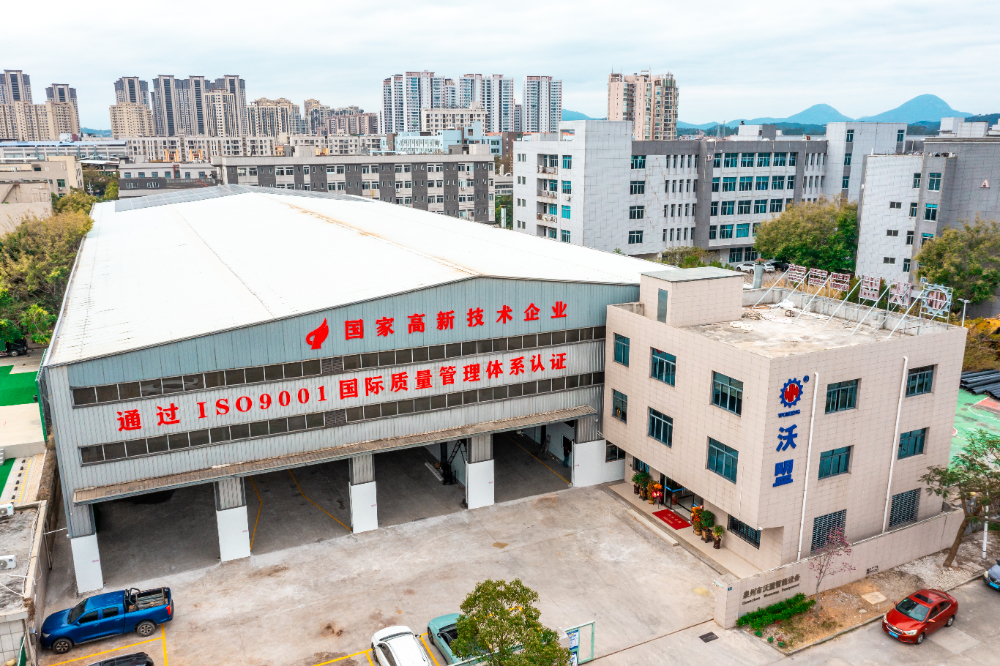
Investing in an adult diaper manufacturing line is a major decision—choose the wrong equipment supplier and you could face costly downtime, inconsistent output, and frustrating support delays. Before you sign any contract, it pays to know exactly what to look for. In this article, we'll break down the key factors that separate dependable manufacturers from risky ones. Drawing on real-world expertise, Womeng helps you focus on what truly matters for long-term production success.
Can the Manufacturer Sustain Your Target Output?
Look past the glossy capability deck and ask for the last twelve months of shipment data against orders of a similar profile. Pay attention to the final two weeks before each deadline—not the average, but the wobble. When a line is already running at 92% of nominal capacity, a single unplanned stoppage can cascade into missed targets. Push them to demonstrate how they absorb a 15% spike without borrowing time from your order or slipping on defect rates. If they cannot show a concrete overflow plan—such as a parallel line, cross-trained shift, or pre-approved subcontractor—their “yes” is really a hope.
Durability of output is less about machinery and more about the supply chain behind it. A manufacturer may quote a confident monthly volume, yet rely on a single source for a critical resin, fastener, or board. Ask what happens to your target if that supplier misses by three weeks. Request their raw material buffer policy in days, not adjectives. Also look at how they manage temporary labor during peaks: too high a share of short-term workers often shows up as higher variance in first-pass yield, because the tribal knowledge of the line is not evenly distributed.
Finally, weigh the human and maintenance signals that factories rarely volunteer. A machine running forty-year-old spindles can still hit spec—until it runs for eleven consecutive days. Ask for the average time between unplanned interventions and the age of the oldest active asset on your specific line. On the people side, a core welder or set-up technician with twelve years on the job is worth more than a new CNC. If that person left last quarter, your target output now rests on a training curve. Require a short list of the three positions most critical to your order and the tenure of the individuals holding them.
Which Raw Materials and GSM Ranges Are Truly Supported?
The answer depends on the production line, but a few materials consistently pass real-world testing. Uncoated woodfree paper, standard corrugated board, and selected poly-coated kraft stocks tend to behave predictably. Their accepted GSM band isn’t a single figure—it usually lands between 80 and 350, though some machines can handle up to 400 with slower feed rates and sharper dies.
Outside that window, two problems emerge: adhesion weakens and die-cutting loses its clean edge. Sheets below 70 GSM often wrinkle or tear when tension shifts, while anything above 400 GSM may resist folding and demand special scoring. In practice, 120–300 GSM is the most forgiving range for double-sided work, and 250–350 GSM suits rigid boxes and hang tags if the grain direction lines up correctly.
Rather than chasing every possible stock, it’s smarter to confirm a short list of proven grades. We regularly support coated art paper, kraft, greyboard, and BOPP laminated sheets, with exact GSM ceilings varying by the lamination layer. If your material sits near a boundary, request a test cut before committing to a full run—that single step removes most surprises.
What Happens When the Line Stops After Installation?
When the line halts right after a new installation, the first thing to surface is usually a mismatch between what the spec sheet promised and what the installed hardware can actually deliver. Sensors may be wired into the wrong input, a firmware update might not have taken, or a safety interlock is reading a false open. Instead of chasing a single root cause, treat the stop as a snapshot of the entire setup.
The stoppage often exposes weaknesses in the pre-installation checklist. If operators didn't run a dry cycle before going live, even a minor misalignment in a conveyor guide or a loose connection in the control cabinet can bring operations to a standstill. The line doesn't just stop—it forces attention toward corners that were assumed to be fine.
In practice, a post-install stop can cost more than the installation itself if it isn't addressed methodically. Shift teams may start bypassing fault codes or forcing outputs just to keep parts moving, which masks the real problem and creates a patchwork of temporary fixes. The better move is to isolate the zone that tripped, compare the as-built wiring to the schematic, and reset only after the discrepancy is resolved. That way, the line restarts with the same configuration that was intended, not a rushed approximation.
Are the Quoted Prices Free of Omitted Essentials?
A quoted price often looks straightforward until you compare it with the final invoice. Freight, packaging, calibration, disposal of old equipment, or even basic setup may not appear in the initial figure. If a supplier quotes a lower number but leaves out these unavoidable costs, the "cheaper" option can quickly become the more expensive one.
To judge whether a price is free of omitted essentials, ask for a line-by-line breakdown before making any commitment. Check whether things like taxes, delivery to a specific floor, software licenses, or routine maintenance are included or listed as extras. The most reliable quote is one that surprises you only with its completeness, not with additions you assumed were part of the deal.
Which Existing Buyers Will Honestly Discuss Their Experience?
You can't expect every buyer to open up. The ones who do tend to have a clear before-and-after story—they remember the friction they felt early on, and they can point to the moment things shifted. Ask your sales or support team who has already sent a thank-you note, referred a colleague, or pushed back on a renewal price without threatening to leave. Those are the people with real opinions, not just polite satisfaction.
Also pay attention to buyers who ask detailed questions during onboarding or implementation. They're not complaining; they're invested. If they've taken time to explain a workflow or suggest a tweak, that's a signal they'll talk honestly later. A quiet, smooth renewal isn't the same as a willingness to be quoted. You want the ones who have skin in the game and a story they're already telling internally.
Do the Machines Meet Import and Safety Rules in Your Region?
Before you finalize a purchase, check which local standards actually apply to your area. Some regions require CE marking, others insist on UL or CSA certification, and a few accept a combination depending on the machine type. Don't assume a global certificate covers everything—what passes in one country may not satisfy inspectors in another.
The importer usually carries the burden of proving compliance. Keep the technical file ready, including test reports, declarations of conformity, and any documents that show the machine was built to the relevant directive or regulation. If the equipment involves high voltage, gas connections, or pressurized parts, additional permits or field inspections may be required before it can be switched on.
It's also worth checking practical details like voltage, frequency, and plug configuration. A machine that's electrically safe but fitted with a non-standard connector can fail a local inspection. Ask your supplier for clear photos of the rating plate, warning labels, and any third-party marks before the unit leaves the factory.
FAQ
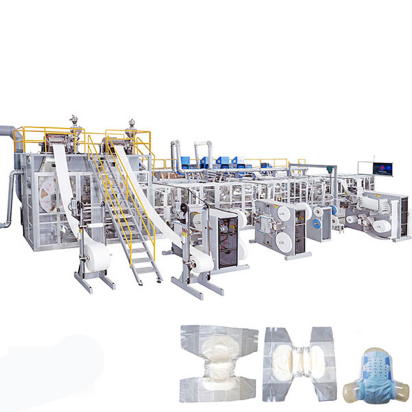
It depends on the product type. For standard pull-up pants, look for a stable output of 250-350 pieces per minute, not just the peak speed shown in a demo. For tape diapers, 300-400 pieces per minute is common. Ask for a 24-hour continuous run test report, not a short showcase.
Request raw production data from existing customers or run a trial with your own materials. A well-tuned machine should keep waste below 2-3% for nonwoven and film. Pay attention to how the machine handles splice waste and core forming. Never rely on brochure numbers alone.
Get a written response time guarantee, such as 4 hours for remote diagnosis and 48 hours for engineer dispatch. Include at least two onsite training sessions and clarify whether software updates and remote monitoring are free for the first two years. Also ask for details about their local service partner network.
If you anticipate market shifts, choose a modular design that can switch between tape diapers and pull-ups within 2-4 hours. But be careful: overly flexible machines often compromise speed and stability. For high-volume single product, a dedicated line is usually more cost-efficient.
Beyond the machine price, include freight, import duties, foundation and cleanroom modifications, air compressor and chiller requirements, spare parts for the first year, which usually amount to 5-8% of the machine value, and travel costs for operator training. Also consider energy consumption per thousand pieces.
Ask for recent upgrade case studies where they retrofitted older machines with new features like ultrasonic bonding or smart sensors. Check if they have an in-house software team. A manufacturer that only assembles bought components will struggle to support long-term improvements.
At minimum, CE marking for Europe, and for North America, ensure electrical components meet UL or CSA standards. Also ask for ISO 9001 factory certification and, if relevant, sanitary design documentation. Do not accept vague international standards claims; ask for certificate numbers and verify them independently.
Yes, and not just the showroom. Spend at least one full day watching a machine run your exact product with your own materials. Talk to the operators, not only sales staff. Check the assembly line organization and whether spare parts are actually in stock. If possible, visit an existing customer without the manufacturer's escort.
Conclusion
Investing in an adult diaper production line demands more than comparing horsepower or price tags. You need to pin down whether the manufacturer can actually deliver your target output under real conditions, not just in a brochure. Ask for run-rate data on the specific materials you plan to use, because a machine that handles 400 GSM fluff pulp may struggle with thinner or thicker cores. Raw material compatibility and GSM range are often glossed over until the first trial run, when jams and uneven padding force costly adjustments.
After installation, the real test begins. If the line stops, will the supplier have engineers nearby or just a phone script? Clarify response times, spare parts stock, and whether training is included before you sign. Dig into the quote for omitted essentials: air compressors, conveyors, dust extraction, or voltage-specific components can add tens of thousands later. Talk directly to current buyers who run similar products, not just the references the sales team hands you. Finally, verify that the machines meet your region's import and safety rules, including electrical certification and guarding standards. A cheap machine that fails a customs or workplace inspection is no bargain.
Contact Us
Contact Person: Jessie Lai
Email: [email protected]
Tel/WhatsApp: 86-188594442931
Website: https://www.wm-machinery.com