

Best Wheel Heat Exchanger Solutions for Optimal Heat Transfer
2026-11-01
Heat transfer challenges can quietly erode system performance—until you find the right wheel exchanger. For facilities chasing tighter temperature control and lower energy costs, the search often ends with engineered rotary solutions. ROTER brings a practical edge here, turning thermal recovery into a measurable gain. This post unpacks what makes certain wheel heat exchangers stand out and how to spot the optimal fit for your setup.
Why Thin-Foil Media Recover More Heat at Lower Temperature Gaps
The thermal behavior of thin-foil media runs counter to intuition when the driving temperature difference shrinks. A thinner cross-section presents less resistance to conduction, but the real advantage emerges from the foil's ability to reach a uniform temperature almost instantly. At small temperature gaps, surface effects and boundary-layer dynamics dominate, and a foil with minimal thermal mass avoids the sluggish interior that plagues thicker exchangers. The result is that heat transfer remains efficient even when the gradient is barely steep enough to move energy.
Thick materials store a disproportionate amount of heat in their core, forcing the system to first warm the bulk before meaningful recovery can occur. Thin foil sidesteps this penalty. Because the foil's entire thickness participates in the exchange within a fraction of a second, the effective surface area for heat pickup stays fully active. This is especially critical when the incoming and outgoing streams differ by only a few degrees—conventional media would stall, while the foil continues harvesting low-grade heat that would otherwise be lost.
Another factor is the foil's high ratio of exposed area to contained volume. With less material between the two fluid streams, the temperature profile across the foil remains nearly flat, eliminating internal temperature drops that sap performance in low-gradient conditions. Manufacturers often overlook this, but field data from waste heat recovery units shows that thin-foil cores consistently outperform thicker counterparts precisely when the thermal driving force is weakest. The practical takeaway is simple: for low-temperature heat recovery, thin foil is not just an option—it is the only sensible choice.
Sealing the Wheel Edge to Stop the Overlooked Leak That Undermines Transfer Efficiency
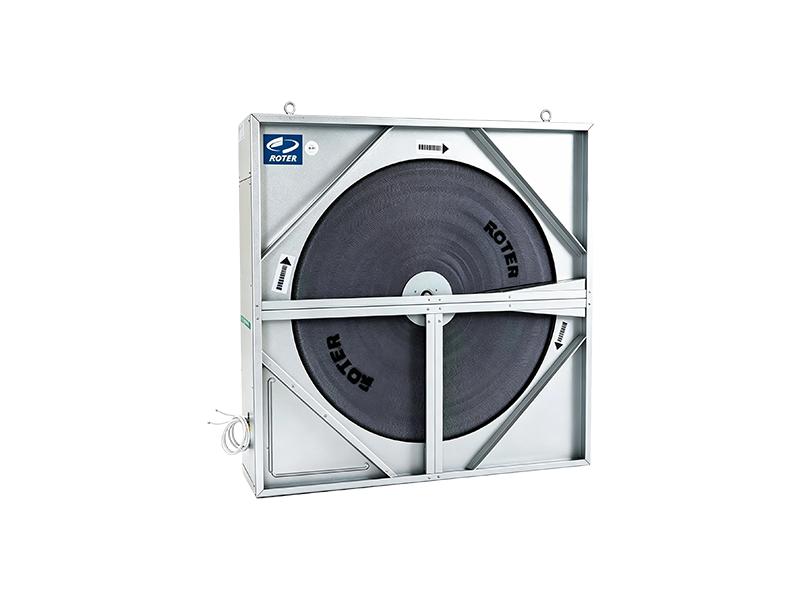
Most finishing lines chase big-ticket fixes while a small gap at the wheel edge bleeds pressure and breaks the spray pattern. That steady hiss isn't just noise; it lets unmetered air slip into the booth, disturbing the balance between fluid flow and shaping air. As a result, atomization suffers, overspray climbs, and transfer efficiency drops by a few points that quietly add up.
A simple perimeter bead or a snug edge gasket restores the intended plenum pressure and keeps the air where it belongs. The change is inexpensive, takes minutes, and shows up immediately in film build consistency and powder or paint usage numbers. Once that edge is sealed, the guns hold their settings longer, and the line stops paying for air that never reaches the part.
Rotary Wheels in Part-Load Conditions Outperform Fixed Plate Units
When ventilation systems operate away from their design point, fixed plate heat exchangers tend to lock into a single recovery rate regardless of actual demand. This often means too much heat transfer during mild weather, causing supply air temperatures to drift above comfort levels or pushing indoor humidity to uncomfortable lows. Rotary wheels, by contrast, can adjust their rotational speed on the fly, giving building operators a simple lever to tune sensible and latent recovery to match real-time loads.
That variable-speed behavior becomes especially valuable in shoulder seasons or part-load afternoons. Instead of bypassing the exchanger entirely—a common workaround with fixed plate units that wastes any opportunity for recovery—a rotary wheel can slow down and still capture a meaningful portion of the available enthalpy. Because the wheel's matrix transfers both heat and moisture, reducing its rotation speed also limits moisture carryover, which helps avoid over-drying supply air when outdoor humidity is already moderate.
Part-load operation also influences frost formation. A fixed plate exchanger at low outdoor temperatures may need frequent defrost cycles, interrupting airflow and consuming extra energy. A moderated rotary wheel can maintain a lower recovery rate to keep the cold-side surface above freezing for longer stretches, reducing downtime and maintaining steadier interior conditions. The result is not just energy savings but fewer swings in temperature and humidity, which occupants tend to notice far more than a spreadsheet does.
Material Pairings That Handle Acidic Exhaust Without Sacrificing Conductivity
Finding a material that stands up to hot, sulfur-laden exhaust is hard enough. Finding one that also keeps electrons flowing freely is where most off-the-shelf alloys fall flat. Stainless steel looks promising on paper, but the chromium oxide layer that protects it from acid also acts as an electrical choke point. A better route pairs a corrosion-resistant substrate like Hastelloy C-276 with a thin, sputtered gold or platinum coating. The noble metal carries the current while the underlying nickel-chromium-molybdenum matrix shrugs off sulfuric and hydrochloric acid mist. The key is a diffusion barrier between the two, often a few nanometers of tantalum or titanium nitride, to stop the substrate atoms from migrating up and poisoning the conductive surface.
Another overlooked pairing is graphite felt infused with a perfluorinated polymer. The graphite fiber network provides plenty of conductive pathways, and the fluoropolymer fills the voids to block acid penetration. Unlike metallic coatings, this composite doesn't rely on a perfect interface — the polymer swells slightly in humid exhaust, sealing micro-cracks before they can spread. For lower temperature environments, consider a silver-palladium alloy brazed onto a titanium-zirconium-molybdenum core. The silver-palladium layer resists tarnishing from sulfur compounds and retains high conductivity, while the TZM core adds mechanical strength without introducing a galvanic couple that accelerates pitting.
Perhaps the most underrated option is a cermet blend of tin oxide and antimony-doped tin oxide. The antimony dopants create an electron-rich surface that actually improves its own conductivity in acidic vapor by adsorbing hydrogen ions as charge carriers. Pair this with a machined ceramic housing made from silicon carbide, and you get a system where the conductive element is chemically stabilized by the exhaust itself. The trick is maintaining a slightly positive bias on the cermet to keep the acid from reducing the tin oxide back to metallic tin, which flakes off and shorts adjacent channels.
What Wheel Speed Tuning Does to Sensible and Latent Transfer Balance
Adjusting wheel speed parameters does more than change how quickly a given corner is negotiated. It reshapes the timing and magnitude of load migration across the contact patches. When a wheel is allowed to spin up or is deliberately braked, the resulting longitudinal force delta shifts mass forward or rearward, and that shift feeds directly into the steering response a driver feels at the wheel. This is the sensible side of transfer balance—the immediate, perceptible change in turn-in eagerness or mid-corner push.
Beneath that surface effect, a latent rebalancing occurs. Tire slip angles and thermal loads redistribute across the axle pair without any obvious change in chassis attitude. A small increase in rear wheel speed may momentarily reduce rear lateral grip, but as the tire scrubs and heats, its friction curve can recover and even exceed the previous level. The result is a delayed, almost hidden adjustment to cornering balance that only shows up after several laps or hard braking zones.
The practical takeaway is that wheel speed tuning is never a single-axis adjustment. You tune the immediate, felt response and simultaneously set in motion a slower, less visible redistribution of grip potential. Ignoring the latent side leads to a car that feels stable on lap one and then develops an unpredictable oversteer or understeer drift later in a stint.
Retrofitting a Paint Booth Heat Wheel Without Replacing Ductwork
Replacing a paint booth heat wheel usually starts with the assumption that the surrounding ductwork has to be torn out and redone. That assumption drives up cost and downtime, but in many cases it simply isn't necessary. A retrofit can be planned around the existing duct openings by taking precise internal measurements and then selecting a wheel cassette with matching wheel diameter, depth, and drive orientation. Even if the original wheel is no longer manufactured, custom adapter frames or split housing designs let the new wheel slide into the same footprint without cutting into the main duct runs.
The key is to work from the duct flanges inward, not from the wheel outward. Start by verifying the existing duct connections, airflow direction, and seal locations. Then, install the new wheel with transition plates that bridge any minor dimensional differences between the old housing and the new cassette. In some booths, the wheel can be removed as a cartridge while the outer shell stays bolted to the duct, which means the ductwork never moves. After the retrofit, rebalance the airflow and check the pressure drop across the wheel, but you avoid the structural work and leakage risks that come with replacing long duct sections.
Done right, this approach keeps a booth running with less than half the downtime of a full replacement. The existing duct runs stay sealed and insulated, and the paint booth's air balance is easier to preserve because the overall system geometry doesn't change. Facilities that have limited clearance around the booth or that can't afford to cut through finished walls or roofs benefit the most. The real difference is in planning: measure everything twice, accept that some custom metalwork may be needed for the adapter, and you can upgrade the heat wheel performance without touching the ductwork that already works.
FAQ
A wheel heat exchanger is a rotating porous disk that transfers sensible or latent heat between two air streams moving in opposite directions. As the wheel spins, one half absorbs heat or moisture from the exhaust air, then releases it into the incoming fresh air. This continuous cycling keeps recovery rates consistently high without needing a liquid loop or plate stack.
Facilities with high ventilation demands and strict indoor climate control see the biggest gains—think hospitals, pharmaceutical plants, data centers, and large commercial buildings. In these settings, the ability to recover both heat and humidity at high effectiveness directly lowers energy use and stabilizes supply air conditions.
Start with the airflow rate, pressure drop limits, and the desired effectiveness for your climate zone. A wheel that’s too small will choke airflow and reduce recovery; one that’s oversized wastes space and may hunt at low loads. Work backwards from peak winter and summer conditions, then check that face velocity stays within the manufacturer’s recommended band.
A thermal wheel only transfers sensible heat—temperature changes without moisture movement. An enthalpy wheel uses a desiccant-coated matrix to also move latent heat, meaning it can transfer humidity between the two air streams. If your building has high internal moisture loads or experiences humid summers, the enthalpy version usually delivers better comfort and lower cooling demand.
Inspect the wheel and its seals every three to six months, and clean the matrix at least once a year or whenever pressure drop rises noticeably. Use low-pressure air or water and a non-aggressive cleaner that won’t strip desiccant coatings. Drive belts, bearings, and purge sectors should be checked at the same time to keep the rotation smooth.
Yes, if the wheel material and coating are selected correctly. For high humidity or light chemical exposure, choose a matrix with corrosion-resistant substrates like epoxy-coated aluminum or polymer. For tougher environments, stainless steel or specialized coatings are available, but you’ll need to confirm compatibility with the specific contaminants in the airstream.
Watch effectiveness, pressure drop, and carryover leakage. Effectiveness shows how much of the available energy is being recovered, pressure drop signals airflow resistance and cleaning needs, and leakage—often from purge sector misalignment—can eat into efficiency quickly. Track these together monthly; a sudden change in one usually points to a mechanical or operational issue.
Conclusion
In real-world ventilation and process exhaust systems, the most effective wheel heat exchanger solutions rarely hinge on a single design metric. Thin-foil media stand out because they recover meaningful energy even when the temperature gap between supply and exhaust streams is modest—something thicker cores struggle to do. This matters in mild climates or partial-load operation, where a fixed plate unit often underperforms. But the foil alone is not enough; edge leakage at the wheel perimeter can quietly erase those gains. Properly sealing the rim and using a brush or labyrinth seal stops bypass air that would otherwise short-circuit the transfer surface, keeping measured efficiency close to the lab-rated value.
Beyond sealing and media choice, operators see larger benefits when they match wheel speed to the desired balance between sensible and latent recovery—slower rotation favors moisture transfer, while faster rotation peaks dry-bulb effectiveness. In demanding exhaust streams, material pairing becomes critical: coated aluminum or polymer substrates resist acidic condensate without sacrificing thermal conductivity, preventing corrosion that would degrade performance over time. Retrofits illustrate the practical side—a paint booth heat wheel can be installed inside existing ductwork by adapting the wheel cassette to the current flange layout, avoiding expensive duct replacement. Under part-load conditions, rotary wheels inherently outperform fixed plate units because their storage mass smooths out fluctuations and they can be controlled by adjusting rotation speed. Together, these solutions—thin foil, edge sealing, speed tuning, acid-resistant materials, and retrofit-friendly cassettes—deliver optimal heat transfer across a wide range of operating scenarios without forcing a complete system redesign.
Contact Us
Contact Person: Rhea
Email: [email protected]
Tel/WhatsApp: +8618800560886
Website: https://www.rotorairtech.com