
Carbonated Beverage Filling Machine Supplier Evaluation Checklist for Bottling Plants
2026-10-27
Choosing a carbonated beverage filling machine supplier without a clear checklist is a gamble your bottling plant can't afford. From carbonation accuracy and speed to hygiene standards and after-sales support, the wrong decision quietly eats into your margins. This guide walks you through the evaluation points that matter most—and why Wanying Machinery is worth a closer look when you start comparing vendors.
Carbonation Experience That Actually Shows Up in Past Projects
In past projects, we’ve seen how carbonation changes the whole drinking experience—not just the initial fizz. One client came to us with a botanical sparkling water that felt sharp and prickly on the tongue. By dropping CO2 volumes and adjusting fill temperature, we shifted the bubble size and texture so the carbonation stayed gentle and didn’t mask the delicate rosemary and citrus notes. That tweak carried through three production runs without drift.
Troubleshooting is where this experience really shows. A hard seltzer project had inconsistent carbonation between tanks because the dosing setup didn’t account for line pressure changes during canning. We mapped pressure drops across the filler, moved the carbonation stone position, and set tighter specs for post-fill agitation. The result: a steady 2.7 volumes with no can paneling or foam loss at week eight.
We’ve also learned that carbonation perception depends as much on sweetness and acidity as on CO2 level. In a low-sugar RTD tea, the same 2.4 volumes felt flat because the reduced sweetness left nothing to carry the bubble. Upping carbonation to 2.8 and adding a small amount of citrus fiber gave the mouthfeel more body. That kind of judgment only comes from running enough past projects to see the pattern.
Fill Accuracy and Foam Control at Your Target Line Speed
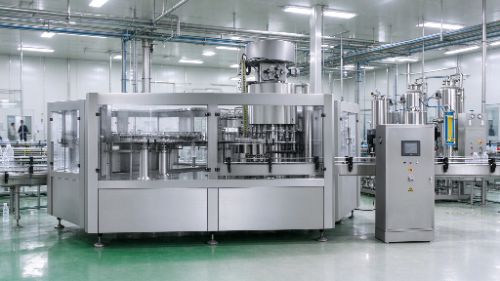
Line speed directly shapes how a filler behaves. Push a machine beyond its calibrated range and you trade accuracy for throughput—small fill volumes drift, repeatability suffers, and foam generation climbs. At your target speed, the fill nozzle's cutoff timing, product viscosity, and back-pressure all interact in ways that are easy to overlook until a weight check flags the drift.
Foam control is not a separate problem from accuracy; they share the same root causes. A nozzle that closes too slowly at high speed leaves a trailing stream that splashes or aerates the product. A quick mechanical snuff-back valve may stop drips, but it can also pull air into the liquid column, creating micro-foam that changes the effective fill volume. The fix is often not faster valves but a nozzle geometry matched to the product's rheology at the exact line rate you intend to run.
Rather than chasing the highest possible speed, lock in the range where your fill tolerance stays inside ±0.5% and foam height remains under your downstream cap inspection threshold. Small adjustments—like lowering the fill tube closer to the container bottom or switching to a bottom-up fill profile—can buy back 10–15% more line speed without sacrificing repeatability. Test at three speeds below and above your target, log the weight deviation per nozzle, and you will see the true operating window emerge.
Sanitary Welds, Surface Finishes, and Clean-in-Place Access
Getting a cleanable weld isn't just about passing a borescope check. It's about understanding how the heat-affected zone behaves when you pull the arc away. Too much purge pressure and you get sugaring on the backside; too little and the root opens up into a crevice that spray balls will never truly scour. We've shifted away from chasing a mirror finish on every interior surface and now spec Ra values based on what actually contacts the product. A 32 Ra might be fine for a transfer line, but put that same finish inside a fermenter with frequent CIP cycles and you'll watch biofilm establish itself in the valleys within a few months.
Surface finish gets treated like a number to hit on a drawing, but the real question is whether the topography aligns with the cleaning mechanism. Electropolishing helps, sure, but it doesn't fix a bad weld profile. What matters more is the transition from weld bead to parent material—any undercut or overlap creates a shadow zone where turbulent flow just doesn't reach. We've started requiring weld maps that show exactly where each pass starts and stops, because those stop points are where pitting initiates. And when you're dealing with high-purity water systems, even a 20 Ra surface will underperform a 15 Ra if the polishing lines run perpendicular to flow instead of parallel.
Clean-in-place access often gets designed backwards: the tank is built, then someone realizes the spray ball can't hit the manway hinge area. Proper access means thinking about drainability and shadowing from the very first sketch. We put dummy spray devices into CAD models early, checking coverage on sloped surfaces and around baffles. A common mistake is placing the CIP return line too high, so the vessel never fully empties between cycles—that residual pool becomes a microbial incubator no matter how shiny the welds are. And don't forget about dead legs. A welded branch off the main line, even if it's short, can ruin an entire cleaning validation if the flow velocity through that stub drops below 1.5 meters per second.
Changeover Time When Bottle Sizes or Carbonation Levels Shift
Changeover begins long before the last bottle of the previous run. If the filler has 60 valves, swapping from 330ml to 750ml means adjusting every fill tube height, changing neck guides, and re-timing the star wheels. A compact line can do this in 25 minutes with two experienced techs; a larger line with automated size parts might push 40 minutes if the changeover cart isn't staged properly. When carbonation also changes, don't stack the two tasks blindly—most plants find it faster to finish the mechanical size shift first, then address CO2.
Changing CO2 is not a quick dial turn. The saturation tank needs to be vented and re-pressurized to the new target, and the filler bowl temperature often drifts while this happens. For a move from 2.8 to 3.4 volumes, expect 20-35 minutes of stabilization after the pressure change, plus lab checks on the first few samples. Foaming and undercarbonated product are the usual signs you rushed this changeover; both cause downstream rejects that wipe out any time saved.
When a run switches both bottle size and carbonation (e.g., 500ml still to 1L sparkling), the worst planning mistake is to do everything simultaneously and hope for the best. A smarter sequence uses the CO2 stabilization window to do the mechanical size changeover in parallel—one team handles the filler, another the labeler and packer. This overlap can cut total downtime from over an hour to roughly 35-45 minutes, provided the tank pressure and temperature are already climbing toward the new setpoint before the last old bottle exits.
Factory Acceptance Tests, Validation Documents, and Operator Training
A factory acceptance test is less about confirming the equipment turns on and more about proving it behaves exactly as specified under load, fault, and edge conditions. We test every safety loop, alarm setpoint, and interlock sequence in front of the customer's project team, and any nonconformance gets logged against the original functional specification before the unit leaves the shop floor.
The validation package is assembled from the marked-up drawings, instrument calibration records, and signed test logs generated during FAT. Instead of a boilerplate binder, each document references the machine's tag numbers and the actual settings observed, which lets a future engineer trace a parameter change back to its source without guessing.
Operator training takes place after final adjustments but before shipment, using the same HMI and control logic the operators will encounter in their plant. Sessions are limited to three or four people so each person gets hands-on time with start-up, normal shutdown, emergency stop, and clearing routine faults. The goal is not a scripted demonstration but enough deliberate practice that the first shift can run the line without a vendor representative standing by.
Spare Parts Stocking and Response Time After Startup
Getting a new line running after startup rarely goes exactly as planned, and the first few weeks often reveal which spare parts were truly necessary and which were just guessed at. Stocking decisions made during commissioning shape how quickly the maintenance team can react when a bearing seizes or a sensor fails at 2 a.m. Without the right parts on the shelf, a minor hiccup can stretch into a full shift stoppage while someone scrambles to find a courier or a local distributor who might have the item.
Response time after startup depends less on the size of the spare parts inventory and more on how well it matches the actual failure patterns of the new equipment. Machines that ran fine during factory acceptance testing can behave differently once they are bolted to your floor, connected to your utilities, and pushed to meet real production targets. Teams that track early failures closely and adjust their stock levels week by week tend to recover from breakdowns much faster than those who simply filled a cabinet based on the vendor's generic recommended list.
A practical approach is to treat the first 90 days as a live experiment. Keep a log of every part that gets pulled, every expedited order placed, and every time a machine sits idle waiting for a component. Then use that data to prune items that are never touched and boost quantities for the two or three components that fail repeatedly. This turns spare parts stocking from a one-time purchasing task into an ongoing tuning process, directly cutting response time when the next unexpected startup issue appears.
FAQ
A useful checklist goes well beyond price and delivery lead time. It should cover filler bowl pressure stability, CO2 consumption per bottle, the materials used for valves and seals, the ease of switching between different bottle sizes, and how the machine handles foam control at high speeds. You also want to see a clear breakdown of what the supplier includes in terms of installation support and operator training, since those costs can easily get hidden.
Ask for specifics instead of accepting general sales talk. A supplier who really knows carbonated beverages will explain how their counter-pressure system prevents breakout, how they manage dissolved oxygen pickup, and what they do to reduce product temperature fluctuation before filling. Request detailed process data from running lines, and if possible, visit a plant that fills a similar product with similar carbonation levels. The details they provide will tell you a lot.
The product contact surfaces should have a smooth finish with no dead legs or hard-to-reach pockets where syrup or microbes can build up. Look for CIP-ready design with spray balls or rotating jet cleaners that are easy to validate. Quick-release guards and tool-free access to fill valves also matter, because production teams will cut corners if cleaning takes too long. If the supplier cannot show you a detailed cleaning validation report, that is a red flag.
You need a written commitment on response time, not just a friendly voice on the phone. A good supplier will keep critical spare parts either in your warehouse or in a regional hub and provide remote diagnostics access. Ask about their average time to get a technician on site and what happens if a major component fails during peak season. Also check whether their service team has experience with carbonated lines specifically, because adjusting counter-pressure fillers is not the same as servicing a still water line.
They can be the difference between a smooth start-up and months of troubleshooting. Try to visit at least one plant running the same model with a similar product matrix, bottle size, and output speed. Pay attention to how the operators talk about the machine, not just what the plant manager says. If possible, run a short trial with your own product and bottle specs, since carbonation level and syrup composition can change how the filler behaves.
Ask for current certificates for the electrical and mechanical safety standards relevant to your region, as well as any food contact material declarations for seals, gaskets, and lubricants. For a bottling plant, it is also worth checking whether the supplier has experience with your target markets' labeling and packaging regulations. The checklist should include a review of the machine's guard interlocks, pressure relief devices, and any risk assessment documentation they can provide.
Start by separating must-have and nice-to-have criteria. If you plan to run both PET and glass or multiple neck finishes, weigh the supplier's changeover time and the cost of change parts heavily. For high-speed lines, give extra attention to foam control, valve design, and CO2 consumption per container, because small inefficiencies multiply quickly. You can also add points for suppliers who have successfully handled seasonal product changeovers without long downtime.
Conclusion
When bottling plants assess a carbonated beverage filling machine supplier, the first filter is not the glossy brochure but the supplier's track record in carbonation. You want to see references where carbonation levels were held within tight tolerances on long production runs, not just pilot batches. Ask for line-speed data showing consistent fill heights and minimal foaming at your specific bottle diameter and carbonation pressure. A machine that works perfectly at 10,000 bottles per hour can fall apart at 24,000 if the vent tube design and filler bowl pressure control were never proven at that velocity.
Beyond speed, the physical construction and support systems decide whether the line stays reliable month after month. Check that all product-contact welds are sanitary and ground flush, surface finishes meet 3-A or similar standards where required, and clean-in-place spray balls or rotating jets actually reach every corner of the filler bowl and filling valves. Changeover is another hidden cost: if switching from a 500 ml PET bottle to a 1.25 liter bottle at a different carbonation level takes a full shift and three mechanics, that supplier is not ready for a modern SKU-heavy plant. During factory acceptance testing, insist on running your own bottles, closures, and syrup formulas, not the supplier's ideal test fluid. Review the validation package—IQ/OQ protocols, material certificates, and as-built drawings—before the machine ships, and make sure operators receive hands-on training with the actual control panel, not a generic PowerPoint. After startup, downtime is measured in hours, not days, when the supplier stocks critical seals, filler valve parts, and PLC components locally and can dispatch a technician within 24 hours.
Contact Us
Contact Person: Tyson
Email: [email protected]
Tel/WhatsApp: +8613396971296
Website: https://www.wanyingmachinery.com