

D Rings Manufacturer Tips for Choosing the Best Hardware Supplier
2026-10-05
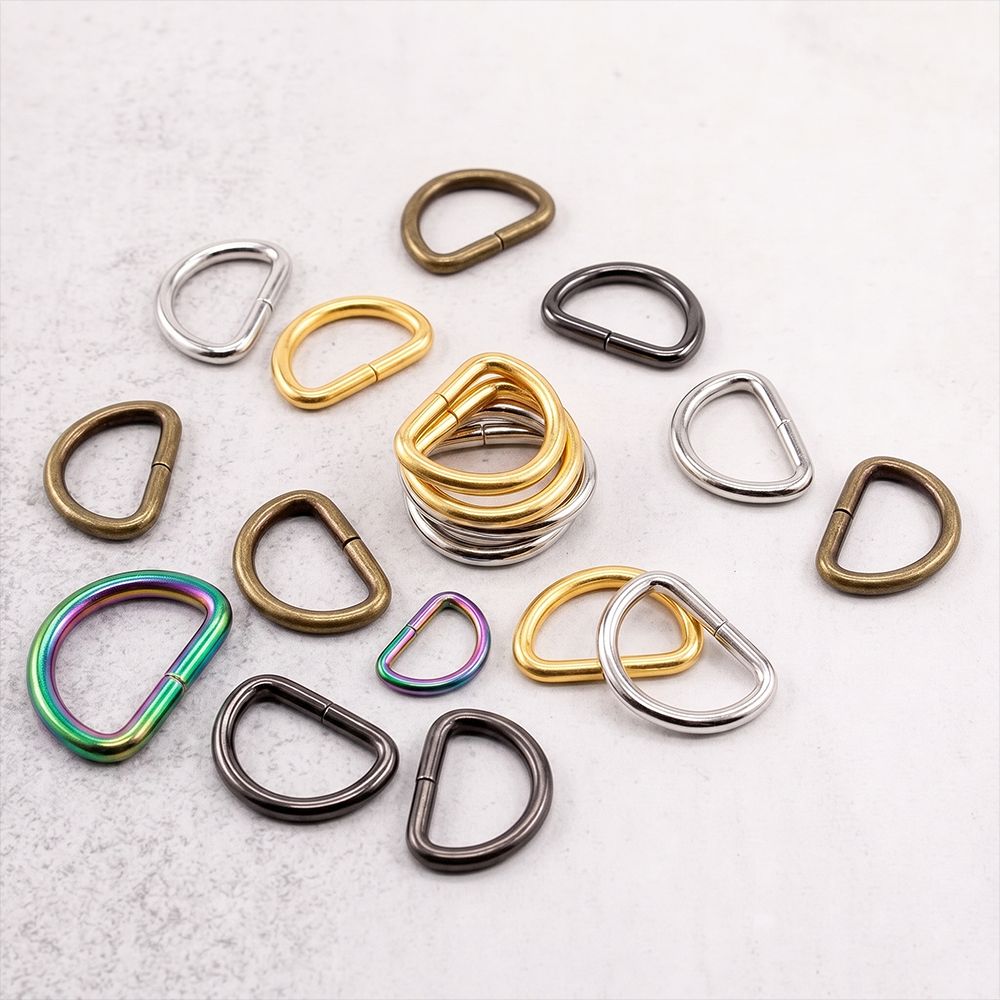
When your project depends on D rings that won't fail under load, picking a hardware supplier becomes more than a box-ticking exercise. The market is crowded with look-alike options, yet small differences in material, finish, and tolerances separate a secure connection from a costly callback. That's why many builders and procurement teams turn to Kingming—a manufacturer that treats D rings as engineered components, not commodities. In this guide, we'll walk through the practical checks that help you choose a supplier who can deliver consistency, durability, and support when it matters most.
Read the Fine Print on Material Grades and Finishes
Material grades aren't just numbers; they dictate how a part behaves under load, temperature, and corrosion. A 304 stainless might pass a visual check but fail in a chloride-rich environment where 316 is required. Similarly, a "commercial grade" aluminum may have wide tolerances for alloying elements, affecting machinability or weldability. Always cross-check the mill certificate against the drawing's specified grade—don't assume a generic "stainless" or "aluminum" covers your needs.
Finishes are equally easy to misinterpret. A brushed finish can range from a coarse 80-grit directional grain to a fine 320-grit satin, and each reflects light, hides fingerprints, and resists scratches differently. Anodizing thickness, powder coat mils, or plating specs like zinc with clear chromate vs. zinc-nickel are not interchangeable. If the print just says "painted," ask for the coating system, DFT, and cure schedule.
Small discrepancies in grade or finish often surface only after assembly or weathering. Prototype a sample, run a salt spray test, or check hardness—even a quick file test can reveal if you got the wrong temper. When suppliers push back on a callout, request written clarification; verbal assurances won't help a warranty claim.
Visit the Factory Floor (Even Virtually) Before Signing
Walking the actual production line before committing to a supplier reveals far more than any polished brochure or sales call ever could. You'll notice how materials are stored, whether equipment is regularly maintained, and if workers follow consistent processes or improvise on the fly. Even a short visit can expose red flags like cluttered aisles, outdated tooling, or quality checks performed only at the end rather than throughout each stage.
If an on-site trip isn't feasible due to distance or time, request a live video tour instead. Ask to see the specific area where your product would be made, not just the showroom or a prepared section. Watch for unscripted moments—how staff react when asked about a recent defect, or whether supervisors can immediately pull up production records. A factory that hesitates to show you real-time operations or only offers pre-recorded footage may be hiding capacity constraints or inconsistent quality control.
Use the walkthrough to verify claims from earlier discussions: Does the stated number of workers match what you observe? Are certifications posted and current? Is there a clear system for traceability from raw material to finished goods? These observations give you a practical baseline for comparing suppliers, reducing the risk of surprises after the contract is signed.
Test a Small Batch Before Placing a Bulk Order
Ordering hundreds of units based on a product photo or spec sheet is a gamble. A small test batch lets you inspect stitching, material thickness, print alignment, and packaging without committing significant capital. If the supplier ships a sloppy sample, you have not locked yourself into a costly mistake.
Beyond physical quality, a test run reveals how the supplier handles communication, deadlines, and unexpected issues. Ask them to produce the batch under conditions close to your final order: same materials, same finishing, same labeling. Then watch how they respond to a reasonable change request or a delayed component. That behavior is a preview of your long-term relationship.
Use the small batch to collect feedback from a handful of real customers or colleagues before scaling up. Even if the product looks fine to you, a quick user test can expose a sizing issue, a design flaw, or packaging that gets damaged in transit. Fixing those details now is far cheaper than recalling or discounting a full container later.
Ask Pointed Questions About Custom Tooling Costs
Tooling quotes rarely arrive with a clean breakdown. If you only ask for the total, you lose the chance to spot where the real money goes. Push for line items: what’s the cost of the mold base versus the cavity work, how many hours are allocated to polishing, and whether the quote assumes a certain number of adjustments after the first trial shots. These details expose whether a supplier is padding for convenience or pricing for actual complexity.
Ask what happens when steel changes or the part design shifts by a few millimeters. Cheap tooling often carries hidden revision fees, while higher upfront costs may include a few engineering changes without extra charges. Question the expected tool life in cycles, the maintenance schedule, and who covers repairs during the warranty period. These are not confrontational questions; they reveal whether the supplier has thought through the entire production run or just wants to close the sale.
Finally, compare the cost of moving the tool later. A lower price from one vendor can disappear if you need to transfer the mold after a year of poor support. Ask for ownership terms, cad file delivery, and whether spare inserts are included. Pointed questions turn a vague number into a real plan.
Check Their Response Time When You Request a Quote
A quick reply often tells you more than any brochure or portfolio. When you ask for a quote, pay attention to how long it takes to hear back. A contractor who gets back to you within a day—even just to say they need more details—shows they value your project and manage their schedule well. On the other hand, waiting several days with no word can be a red flag, especially if they eventually respond with vague answers or pushy sales talk.
Don't just count the hours, though. Look at the quality of the response too. A thoughtful reply that asks about your specific needs, mentions potential challenges, or suggests a site visit is far better than a generic price dump. It shows they're actually thinking about your job, not just copying and pasting a template. If they take a while but come back with a detailed, personalized plan, that can still be a good sign—it means they're thorough, not lazy.
Try sending quote requests to two or three different companies at the same time. Compare their response times and the substance of their answers. You'll quickly see who treats new inquiries seriously and who treats them as an afterthought. The way they handle this first step is often a preview of how they'll handle the whole project.
Look for Suppliers Who Specialize in D Rings, Not Everything
When sourcing D rings, resist the urge to use a general hardware vendor that lists them as just another side item. A supplier whose catalog covers everything from hinges to drawer slides rarely gives D rings the attention they require. You want a partner who handles D rings daily—someone who knows wire diameter, weld placement, coating thickness, and break strength because those details are the core of their business, not an afterthought. That kind of focus usually shows up as tighter tolerances and fewer surprises when the parts land on your dock.
Specialized suppliers also tend to stock more variations—zinc plated, stainless, welded, non-welded, different widths and wire gauges—so you are not forced to settle for a size that is close enough. When a problem appears, a specialist can often tell you quickly whether the issue is in the material, the finish, or the forming process. A generalist may have to chase answers from a sub-supplier, adding delay you cannot afford. Narrowing your search to D ring specialists makes the rest of the sourcing process noticeably smoother.
FAQ
Ask for their current weekly output and the names of a couple of clients running similar volumes. A supplier who gives you a specific number instead of "no problem" is usually more prepared. Also confirm which parts of the process are done in-house versus sent out.
It depends on where the hardware will be used. For outdoor or marine settings, you want a finish that resists rust, like zinc plating with a clear passivate or stainless steel. Ask to see photos from past jobs or request a small sample batch to check for even coating and sharp edges.
If off-the-shelf rings force you to change strap width or mounting hole positions, yes. Custom tooling often pays for itself after a few hundred pieces because you stop modifying surrounding parts.
Put a small paid trial order before committing to a large production run. Check dimensions on every piece in the trial, not just a few. Also ask if the same team handles both samples and production. If they outsource either one, that is a red flag.
At minimum, ask for breaking strength or load rating data, and whether it comes from an in-house test or a third-party lab. For safety-critical uses, request the actual report rather than just a number on a spec sheet.
It depends on your timeline and tolerance for freight costs. Domestic suppliers usually mean faster replacements and easier communication. Importing can cut per-unit cost, but build in extra time for customs and a buffer for quality surprises.
It varies by supplier and whether tooling already exists. For standard sizes, some will do 500 pieces without complaint. Custom sizes often need 2,000 or more to amortize the die. If an MOQ seems high, ask if they can run your order alongside a regular production batch.
Ask for a couple of current client references in your industry, then actually call them. Pay attention to how quickly the supplier responds to technical questions. Slow answers before payment usually mean slower answers after.
Conclusion
A surprising number of buyers skip the fine print and later pay for it. When you're comparing D ring suppliers, pull up the material grade sheet and finishes line by line. Ask what exact alloy they use, how they plate or coat, and whether those specs match your load requirements and corrosion exposure. If a supplier hesitates to share these details, move on. Then, before committing, get eyes on the production floor—many factories now offer live video walkthroughs, and that's often enough to spot sloppy storage or outdated tooling. Also resist the urge to jump straight into a bulk order. Order a dozen or two first, run them through your own QC checks, and see how they hold up under real use, not just in a spec document.
Custom tooling can quietly eat your budget, so ask direct questions about setup fees, die life, and who owns the tooling if the partnership ends. A good D ring maker will quote these costs openly and explain how they amortize them over larger runs. Equally telling is their quote turnaround—if it takes a week to get a simple price, imagine how slow production changes might be. Finally, look for a supplier that lives and breathes D rings rather than a general hardware distributor that lists them among thousands of other SKUs. Specialists tend to catch design flaws earlier, offer better consistency in bend angles and weld seams, and actually remember your last order when you call. That kind of focus is worth more than a slightly lower unit price.
Contact Us
Contact Person: Jamie Zeng
Email: [email protected]
Tel/WhatsApp: +86 13728219269
Website: https://www.kmhardware.com