

PTFE Gland Packing Supplier You Can Rely On for Durable Sealing Solutions
2026-10-30
When a leak brings your operation to a halt, the last thing you want is a packing that quits under pressure. That's where TAIFNO comes in—a PTFE gland packing supplier built around one promise: durable sealing that holds up when it matters most. In this post, we’ll look at what makes their material, design, and consistency different from the usual off-the-shelf options, and why maintenance teams keep coming back.
Why PTFE Handles Aggressive Media Better Than Standard Packing
Standard packing materials often rely on graphite or aramid fibers, which break down when exposed to strong acids, caustics, or oxidizing agents. PTFE, by contrast, remains chemically inert across nearly the entire pH range. That stability comes from its carbon-fluorine bonds, which resist attack even at elevated temperatures. Where conventional packing swells, hardens, or leaches fillers into the process stream, PTFE holds its shape and purity.
The low surface energy of PTFE also prevents media from clinging to the packing surface. Aggressive fluids that would normally crystallize or polymerize on graphite strands tend to slide off PTFE, reducing the risk of shaft scoring and leakage. This self-lubricating behavior means less torque is required to maintain a seal, and the packing does not need frequent re-tightening. In many chemical plants, switching to PTFE extends service intervals by a factor of three or more.
Another overlooked advantage is PTFE's performance under thermal cycling. Standard packings can lose compressibility when subjected to alternating hot and cold aggressive streams, leading to sudden leaks. PTFE's dimensional stability keeps the stuffing box sealed even as temperatures swing from -200°C to 260°C. For maintenance teams, that translates into fewer emergency shutdowns and less product contamination.
The Braiding and Impregnation Details That Decide Packing Life
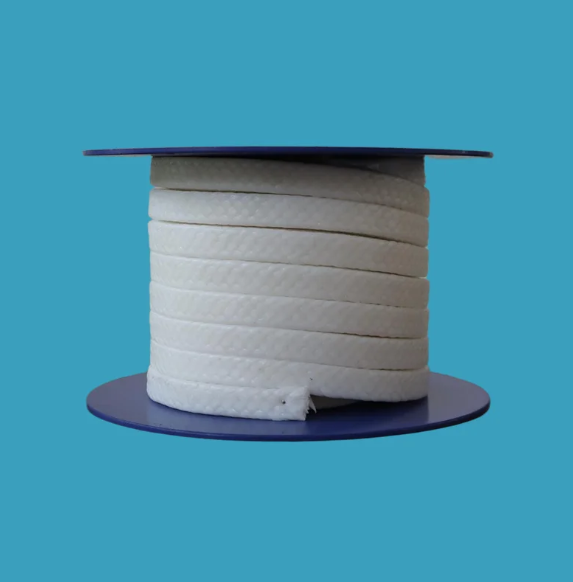
The life of compression packing rarely hinges on the obvious factors like shaft speed or media temperature. Instead, the quiet variables of braid density, corner radius, and the precise timing of lubricant impregnation do most of the heavy lifting. A loosely braided packing might feel forgiving during installation, but it collapses unevenly under load, creating hot spots that burn through the jacket long before the core loses integrity. Conversely, an overly dense braid resists conforming to the stuffing box wall, forcing the operator to over-tighten the gland just to stop visible leakage—and that over-tightening is exactly what shears the fiber ends and shortens service life.
Impregnation is where most packing failures are silently seeded. Too little blocking agent, or the wrong type for the service, lets the process fluid wick through the cross-section and chemically attack the yarn from the inside out. Too much, and the packing behaves like a solid plug that cannot transfer heat away from the shaft interface. The best packing manufacturers treat impregnation as a multi-stage process: a light initial saturant to stabilize the braid geometry, followed by a surface friction modifier that breaks in during the first hour of run-in. Skipping the break-in period after installation is often mistaken for a packing defect, when in reality it is the impregnation chemistry not being given time to form its wear-resistant transfer film.
Field experience shows that two identical packings from the same material batch can differ by 40% in service life purely due to braid angle tolerances and impregnation uniformity. That is why the details matter more than the datasheet. Checking for uniform strand tension, consistent diamond pattern spacing, and the absence of dry core filaments under a 10x loupe tells you more than any advertised pressure rating. The packing that survives longest is the one whose braid was pulled with just enough interlock to hold its shape during installation, but not so tight that the impregnant cannot migrate to the wearing surface when the shaft starts to turn.
Matching Ring Density and Size to Real Operating Conditions
Field conditions rarely align with catalog specifications. A ring sized for a nominal shaft diameter may bind or leak once thermal expansion, pressure distortion, and wear enter the picture. Density plays a quieter role: higher-density materials resist extrusion and deformation under load but transmit more vibration and can score mating surfaces if the contact geometry is not adjusted. The first step is to map the real operating envelope, including temperature swings, peak pressure, and shaft runout, rather than trusting a single rated value.
For example, a carbon ring running in a hot, dry gas environment will grow differently than the same ring in a cool, lubricated compressor. Lower-density carbon often tolerates this growth because it can flex slightly, but it may also shed particles at high surface speeds. The bore clearance and axial width need to be recalculated for the actual thermal gradient across the ring, not just the average housing temperature. Some teams use a simple thermal model or a short bench test to verify that the chosen density and dimensions hold contact without excessive leakage or friction.
When the fluid is abrasive or chemically aggressive, size and density must be balanced against erosion and swelling. A slightly undersized high-density ring can survive longer in a slurry, but it may not recover clearance after a cold start. Conversely, an oversized low-density ring seals well during warm-up but can extrude into the gap under high pressure. The practical approach is to treat density and size as paired variables, adjusted for the worst realistic condition rather than the best case.
Batch Checks We Run Before Any Packing Leaves the Warehouse
Every outgoing batch gets a hard look before tape touches cardboard. We start with the obvious: counts, SKUs, and condition of the outer cartons. If a box shows crushing, dampness, or a label that's even slightly torn, it gets pulled and replaced—no exceptions. Then we cross-check the pick list against physical items, not once but twice, because a missing bolt or wrong finish is cheaper to catch now than on a customer's doorstep.
Next, we open a random sample from each run to inspect the parts themselves. Surface scratches, burrs on machined edges, improper plating, or mismatched hardware all trigger a full batch rework. We also confirm that any protective wrapping, foam inserts, or desiccant packs are present where required. It's not just about avoiding returns; it's about making sure the person opening that box feels like we actually gave a damn.
Finally, we log every check with the packer's initials, date, and batch number. That way, if something does slip through, we can trace it to the exact hour and station. It's a simple system, but it beats a wall of sticky notes and lets us sleep at night knowing the pallet isn't a time bomb.
Installation Habits That Prevent Early Failure in the Stuffing Box
Most stuffing box failures trace back to the first few hours after installation. Rushing the break-in period or forcing the gland down too quickly creates hot spots in the packing that harden into permanent leak paths. Instead, start with a clean, burr-free shaft and a properly aligned gland follower. Lubricate each ring lightly before sliding it in, and never reuse old packing just to save a few minutes. Let the box run loose for the first twenty minutes, then tighten the gland only until leakage slows to a steady drip—never to zero. That drip is your sign that the packing is receiving enough lubrication to seat without scoring the shaft.
Another overlooked habit is checking the lantern ring position against the flush port. If the ring is even half an inch off, the cooling water bypasses the packing entirely and you end up with a burned set of rings inside a perfectly good pump. Before final assembly, run a thin wire through the flush hole to confirm the ring sits directly beneath it. Also stagger the ring joints at ninety-degree intervals and make sure no joint aligns with the gland bolt slots—this keeps the packing from extruding under uneven load. A tiny dab of anti-seize on the gland bolts prevents over-tightening from a false torque reading caused by rusty threads.
Finally, record what you installed. Write the packing size, number of rings, and initial gland position on a small tag attached to the pump. The next person who adjusts the gland will see exactly where it started and will be less likely to crank it down prematurely. This simple habit turns a frustrating, recurring leak into a predictable maintenance item. Packing that survives its first week of proper break-in will typically outlast a rush job by a factor of three or more, and the shaft will show none of the spiral scoring that condemns so many sleeves to an early replacement.
Signs It Is Time to Inspect or Replace Gland Packing
A steady drip from the stuffing box usually means the packing has lost its resilience or has been overtightened past the point of recovery. If you find yourself cranking the gland follower every few days just to keep leakage under control, the packing is already worn out. Fresh packing should seal with moderate compression; once it needs constant adjustment, the material has hardened, glazed, or eroded away. Don't ignore a rising temperature at the gland either. Packing that runs hot is often too tight, but if the heat persists after loosening, the rings may be burned or clogged with crystallized solids.
Another telling sign is shaft scoring or pitting that becomes visible when the pump is idle. Damaged packing accelerates shaft wear, but a shaft that is already grooved will destroy new packing within hours. If you notice deep grooves, replace both the packing and the shaft sleeve. Also watch for particles in the process fluid—torn packing fragments can break loose and travel downstream, leading to contamination or clogged filters. In services with abrasive media, packing life may be shorter than expected, and a sudden increase in drip rate often signals that the rings have been cut by solids.
Finally, listen for unusual noise near the stuffing box. A dry squeal or rhythmic clicking can indicate that the packing has lost its lubrication and is rubbing metal-to-metal. When you remove the old rings, inspect them carefully: if they crumble, feel brittle, or show flat spots instead of a square cross-section, it's past time for replacement. For critical pumps, keep a simple log of gland adjustments and leakage rates. A trend toward more frequent tightening and higher leak-off over a few weeks is a clear trigger to schedule a repack during the next maintenance window.
FAQ
It handles aggressive chemicals, wide temperature swings, and high pressures without breaking down quickly. The low friction surface also reduces shaft wear, which means less downtime for adjustments.
Look for packing made from high-purity PTFE yarns with consistent density. A dependable supplier will share test data on compression set, pH range, and temperature limits instead of just claiming premium quality.
Yes, food-grade PTFE packing is available and meets FDA requirements for incidental contact. It resists oils and cleaning chemicals while maintaining a tight seal around mixer shafts and pump sleeves.
Cutting rings too short or too long, over-tightening the gland follower, and skipping shaft surface checks are common issues. Proper ring orientation and gradual tightening let the packing seat without scorching.
Higher speeds generate more frictional heat. PTFE dissipates heat well, but pairing it with a suitable lubricant or using a lattice braid structure helps prevent glazing and seal hardening at fast rotations.
A quick monthly check for leakage and gland temperature is enough for most pumps. If the leak rate exceeds the recommended drops per minute or the packing feels brittle, it's time to adjust or replace rings.
Reliable suppliers offer cut-to-size rings, cross-section drawings, and technical support for shaft runout issues. They also stock multiple braid styles like interlock and square braid so you don't have to compromise on fit.
Pure PTFE works up to about 260 degrees Celsius, but graphite-filled or aramid-reinforced versions handle hotter steam. Confirm the exact steam pressure and temperature range with the supplier before installing.
Conclusion
PTFE gland packing earns its place in aggressive chemical and high-temperature services because the material resists attack from acids, solvents, and oxidizers that quickly degrade standard graphite or aramid packings. What often gets overlooked is that durability depends heavily on how the PTFE yarn is braided and impregnated. A tight, consistent braid with a well-dispersed lubricant or PTFE dispersion prevents channeling and keeps the packing from drying out under thermal cycling. Equally important is matching ring density and cross-section to actual operating conditions. A packing that is too dense cannot compress properly and may score the shaft, while an undersized or loose ring allows excessive leakage and rapid wear. We treat these choices as engineering decisions, not catalog picks, because a reliable seal starts before the rings enter the stuffing box.
Before any batch leaves the warehouse, our team runs dimensional checks, density verification, and a compression-recovery test to catch irregularities that would shorten service life. But even the best packing fails early if installed incorrectly or ignored. Cutting rings squarely, staggering the joints, and tightening the gland gradually after start-up prevents localized overheating and uneven wear. Users should also pay attention to early warning signs: a sudden need for continuous gland adjustment, leaking that no longer responds to re-tightening, or visible hardening of the packing surface. These symptoms indicate the material has lost its resiliency and should be replaced before shaft damage occurs. A supplier earns trust by combining controlled manufacturing, honest batch data, and practical guidance—so the packing you install today remains dependable through long, demanding runs.
Contact Us
Contact Person: Tommy Xiao
Email: [email protected]
Tel/WhatsApp: 8615651509888
Website: https://www.ptfe-factory.com