

Spring Energized PTFE Seal Wholesaler for Reliable Sealing Solutions in Demanding Applications
2026-10-25
Sealing failures in demanding applications aren’t just costly—they can shut down entire operations. For engineers and maintenance teams tired of standard seals that wear out too fast, TAIFNO offers spring energized PTFE seals built for real-world extremes. As a wholesaler focused on reliable performance, we provide solutions that handle pressure, temperature, and aggressive media without constant replacement. Here’s what sets our seals apart.
What Happens When You Add a Spring to PTFE?
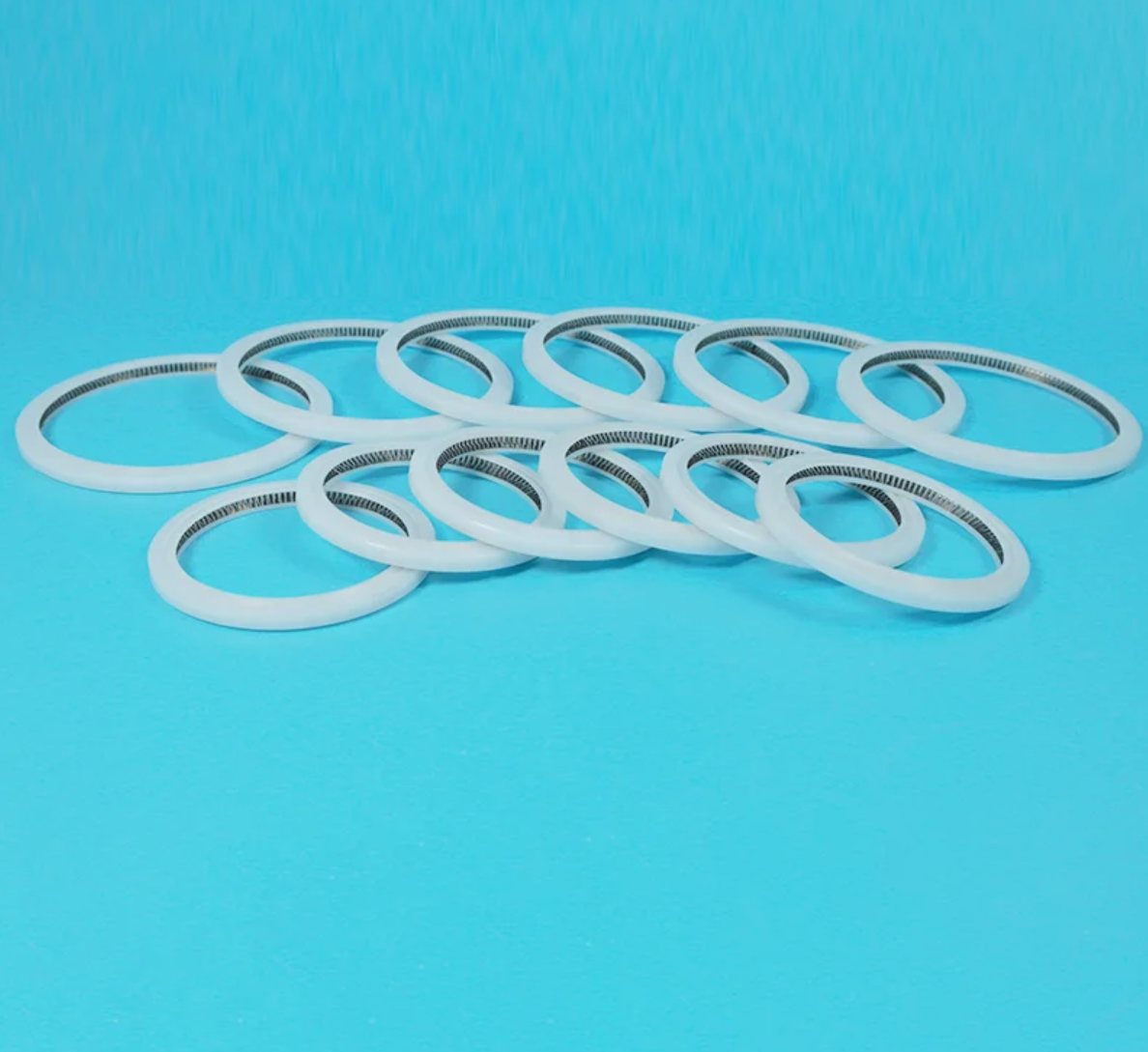
PTFE alone is a terrible spring. It creeps, takes a set, and loses lip contact after a few thermal cycles. Slip a stainless steel coil or cantilever spring behind the PTFE jacket and that changes. The spring supplies a steady, recoverable load that pushes the PTFE lip against the mating surface even when the polymer would normally relax.
That stored energy does more than just keep contact. It masks PTFE's cold-flow problem under high load. As the PTFE wears or deforms, the spring expands or flexes to take up the slack, so contact stress stays within a useful range instead of dropping off. The result is a seal that holds at low pressures and survives temperature swings without the hard plastic set that plagues plain PTFE rings.
There is a trade-off. Friction goes up slightly because the lip is pressed harder against the shaft or bore. But for cryogenic valves, vacuum fittings, and aggressive chemical pumps, that extra drag is worth it. You get the chemical resistance and low friction of PTFE with the resilience of a metal spring, which is why spring-energized PTFE seals show up where standard PTFE would leak or need constant retightening.
Wholesale Buying That Doesn't Cut Corners
We've seen too many buyers chase the lowest price only to end up with pallets of products that fail inspection and damage a brand's reputation. That's why our approach starts with suppliers who can prove consistency across every production run, not just the sample batch. We visit factories, review material sourcing, and ask the uncomfortable questions about labor conditions and defect rates before a single order is placed.
Cutting corners in wholesale usually means hidden costs later: returns, chargebacks, and frustrated retail partners. Instead, we negotiate on total landed cost, including compliance testing and packaging durability, so the unit price you see reflects what actually arrives. If a supplier can't meet those standards, we walk away rather than risk your shelf space.
The result is inventory you can reorder without hesitation, because the quality is predictable from shipment to shipment. No surprises, no bait-and-switch, just wholesale buying that respects both your margins and your customers.
Seals That Outlast the Harshest Conditions
Most seals start to crack, swell, or lose their bite after a few months of thermal cycling, chemical exposure, or abrasive dust. The ones built for the long haul take a different path—they use carefully chosen elastomers and backup rings that stay flexible when temperatures swing from subzero cold to engine-bay heat. That flexibility is what keeps a lip tight against the shaft instead of turning brittle at the first cold snap.
Real durability also comes down to how the seal handles pressure spikes and contamination. A well-designed cross-section pushes the lip harder against the mating surface as pressure climbs, but without extruding through the gap. Adding a wear-resistant coating or a secondary dust lip keeps fine grit from reaching the primary sealing edge, which matters more in mining, agriculture, and heavy equipment than any spec sheet alone can show.
The result is a seal that maintenance teams forget about—not because it is hidden, but because it simply keeps doing its job season after season. When replacement intervals stretch from months to years, the savings in downtime and labor quickly outweigh the slightly higher upfront cost of a better material and a tighter tolerance.
Sizing Without Guesswork
Forget the old habit of grabbing your usual size and hoping for the best. Real sizing starts with three simple measurements: chest, waist, and hip. Take them twice, on a normal day, wearing light clothing, and keep the numbers somewhere easy to find. A flexible tape measure does a far better job than a guess, and it takes less than two minutes.
Once you have those numbers, compare them against the specific brand's chart instead of relying on a generic small, medium, or large. A size 10 in one label can behave like a size 6 in another, so the chart is your only reliable map. Pay attention to the notes about fit—some cuts are meant to skim the body, others to hang loose. That single detail changes which size will actually feel right.
If you're still torn between two sizes, read the garment's fabric and construction. Stiff denim might stretch with wear, so sizing down a touch often works. A knit with a lot of elastane will forgive a closer fit, while a crisp woven shirt won't. When in doubt, pick the size that matches your largest measurement and plan for minor alterations—it's always easier to take fabric in than to let it out.
Why Leak Paths Are a Thing of the Past
For decades, leak paths were an accepted risk in many products because they relied on multiple separate components joined together. Every seam, gasket, or connector was a potential weak point that could fail under pressure, temperature changes, or simple wear. Modern engineering has shifted away from that approach by designing unified housings and integrated sealing surfaces. Instead of bolting parts together with a chance of misalignment, manufacturers now use precision-molded bodies that create a continuous barrier from the start.
Beyond the physical design, the materials themselves have evolved. Older seals often hardened, cracked, or lost elasticity over time, but today's advanced polymers and elastomers maintain their flexibility and bonding strength for the life of the product. Moreover, production lines now include automated leak testing at multiple stages, so any microscopic channel that could allow fluid or gas to escape is caught and corrected immediately. The result is a level of reliability that simply wasn't possible when leak paths were considered an unavoidable part of the design.
Where These Seals Prove Their Worth
The real test for any seal isn’t in a catalog photo—it’s under a compressor housing at 3 a.m. when a single leak can shut down an entire line. In chemical processing plants, the seals that last are the ones that shrug off aggressive solvents, thermal cycling, and constant vibration without hardening or cracking. That’s where the difference between a commodity part and a properly specified seal becomes impossible to ignore.
Oil and gas operations push sealing materials even further. Downhole tools, wellhead connections, and hydraulic systems all depend on seals that hold pressure in the presence of sour gas, abrasive particles, and temperatures that swing from freezing to several hundred degrees. A seal that performs flawlessly in a clean test rig can fail within days in these conditions—so field-proven materials and precise tolerances matter more than datasheet promises.
Even in less extreme settings, like food and beverage production or pharmaceutical packaging, seals earn their keep through repeatability. They must resist aggressive cleaning agents, prevent contamination, and survive thousands of cycles without losing elasticity. In every one of these environments, the cost of a failed seal far outweighs the price of using the right one from the start.
FAQ
The built-in spring maintains constant contact pressure even as the PTFE wears or temperatures swing. That gives you a reliable seal in conditions where a plain PTFE lip would leak or lose tension.
You'll find them in oil and gas, chemical processing, pharmaceuticals, food and beverage, and aerospace. Anywhere aggressive media, extreme temperatures, or strict cleanliness rules make ordinary seals impractical.
Yes. We work from your drawings or sample parts to match unusual groove dimensions, lip styles, and spring loads. Small adjustments in the jacket or spring force often solve persistent leakage problems.
Depending on the PTFE compound and spring material, these seals usually handle -200°C to +260°C and pressures from vacuum up to 2,000 bar. We can recommend a specific configuration after reviewing your operating conditions.
Yes, prototyping and pilot runs are available. You can validate performance in your equipment before committing to larger volumes, which helps avoid costly design mistakes.
Every batch is inspected for dimensional accuracy, spring force, and surface finish. We also maintain traceability on raw materials so you receive the same performance from first article to final shipment.
Our engineers can help with installation guidance, failure analysis, or material selection if your operating conditions change. We treat each inquiry as a partnership rather than a one-time transaction.
Conclusion
Adding a spring inside a PTFE seal changes everything. The spring supplies continuous radial force, so the seal lip stays tight against the shaft or bore even as temperatures swing, pressures cycle, or the PTFE wears down. That means you get a seal that doesn't just sit there—it actively adjusts. When you buy these seals in volume, the temptation is to treat them like simple O-rings. But a wholesaler that understands the material science won't do that. We use only virgin PTFE and corrosion-resistant spring alloys, and every batch is inspected for lip geometry, spring load, and surface finish. The result is a product that gives your customers repeatable performance without the usual lottery of inconsistent stock.
These seals are built for environments that chew up ordinary elastomers—think aggressive chemicals, cryogenic temperatures, high-speed rotating equipment, and hot oil or steam. Spring-energized PTFE handles all of that without degrading or taking a set. Sizing is also handled without guesswork: we work from your shaft or bore dimensions, groove width, and pressure direction to recommend a standard profile or a custom-machined option. Because the spring keeps constant contact and the PTFE forms a tight lip, leak paths that start as micro-gaps simply never get a chance to open. From chemical processing and food-grade machinery to semiconductor fabrication and downhole tools, these seals prove their worth where failure isn't an option.
Contact Us
Contact Person: Tommy Xiao
Email: [email protected]
Tel/WhatsApp: 8615651509888
Website: https://www.ptfe-factory.com