

Wafer Butterfly Valve Supplier: How to Choose the Right Partner for Your Industrial Needs
2026-10-24
Most industrial buyers treat valve sourcing as a checkbox exercise—until a faulty wafer butterfly valve shuts down a line. The truth is that not all suppliers are built for the demands of continuous operation, aggressive media, or tight installation spaces. This guide walks you through the non-negotiable criteria for vetting a wafer butterfly valve partner, from material traceability to emergency response. And when you're ready to skip the trial-and-error phase, DRIFCO offers a benchmark worth comparing against.
Pin Down Your Exact Pipe Size, Pressure Class, and Media Before Reaching Out
Getting the basics wrong wastes everyone’s time. Before you even draft an email or pick up the phone, measure the pipe’s inner and outer diameter with calipers—not a tape measure—and note whether it’s schedule 40, 80, or something unusual. If you’re working with existing pipe, look for stamped markings on the side; if it’s new, check the mill certificate. Don’t guess “about two inches.” A 2-inch nominal pipe has an actual OD of 2.375 inches, and that fraction matters when fittings, flanges, or sensors have to match perfectly.
Pressure class is another silent killer. PN10, Class 150, 300, or 600—each one changes wall thickness, bolt pattern, and gasket requirements. Saying “it’s high pressure” tells a supplier nothing. Write down the exact design pressure in psi or bar, plus the temperature range it’ll see. A pipe rated for 150 psi at room temperature might fail at 250°F. And don’t forget surge pressure: water hammer can spike far beyond the static rating, so if your system has fast-closing valves or pump trips, state that upfront.
Finally, be specific about what’s flowing through the pipe. “Water” could mean potable, deionized, or saltwater—each demands different materials and certifications. If it’s a chemical, give the full name and concentration. Is it abrasive? Corrosive? Does it contain solids? The more you lay out now, the fewer back-and-forth emails you’ll endure later. Suppliers aren’t mind readers; they’re matching your details to a catalog. Hand them a muddled description and you’ll get a muddled quote.
Examine the Valve Body Casting and Seat Material for Signs of Cutting Corners
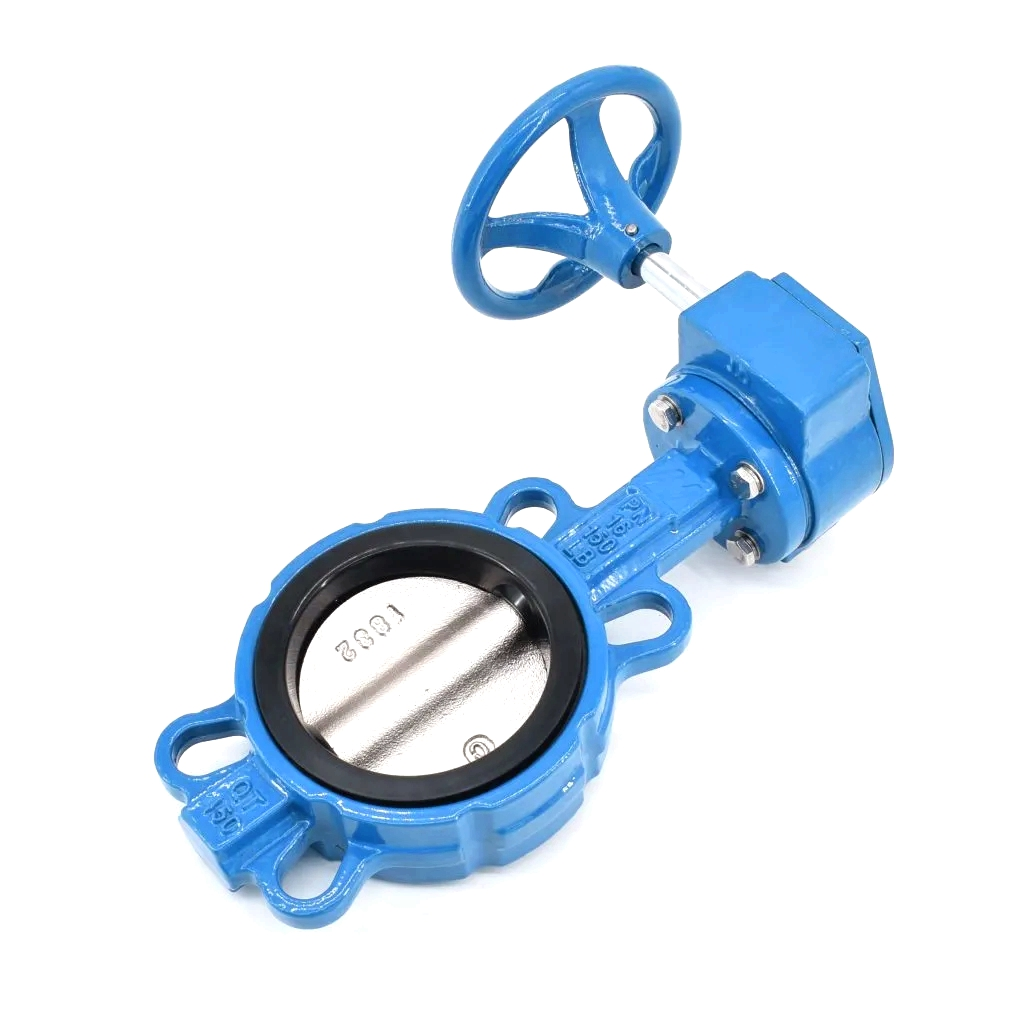
A close look at the valve body casting often reveals whether the manufacturer chose to invest in quality or quietly trim costs. Rough, uneven surfaces, visible porosity, or inconsistent wall thickness are early warnings—these defects not only weaken the structure but also suggest rushed foundry work or reused scrap metal. Similarly, the seat material tells its own story: if it feels soft, scratches easily, or lacks a precise machined finish, chances are a cheaper alloy was substituted without documentation. Such shortcuts rarely show up in a brochure, but they surface quickly under operating pressure and temperature cycles.
Pay attention to how the casting and seat interact at the sealing interface. A properly engineered valve uses a seat that is either integrally hardened or mechanically locked into a machined pocket, with no wobble or adhesive fillers. If you spot gaps, uneven seating marks, or witness signs of corrosion starting at the joint, the manufacturer likely skipped a heat treatment step or used an undersized seat blank to save material. These are the corners that get cut when cost targets override endurance testing, and they often lead to premature leakage or complete seat blowout in service.
To verify what you are seeing, run a simple file test on an exposed non-critical area of the casting—a high-quality ductile iron or steel body will resist deep gouging, while a low-grade substitute will peel away with little effort. For the seat, request a hardness reading or compare its weight against a known good sample from another supplier. Cheaper seats are frequently lighter, thinner, and lack the fine-ground contact band that promotes long-term sealing. If the vendor cannot provide material certifications or heat lot traceability for both the body and seat, treat that silence as confirmation: the corners were indeed cut, and the valve will eventually make you pay for it.
Ask for Proof of In-House Pressure Testing and Material Traceability
Don't accept a supplier's word that components were pressure tested in-house. Ask for the actual test records—dated logs, test pressure values, duration, and the serial numbers or batch IDs tied to each unit. If they hesitate or offer only a generic certificate, treat that as a red flag.
Material traceability matters just as much. Request the full chain of documentation from raw material to finished part: mill test reports, heat numbers, and lot traceability that link each component back to its original material source. Without that paper trail, you can't verify the alloy or grade, and that leaves too much room for substitution.
Check Whether the Supplier Stocks Replacement Seats and Seals in Your Region
When a valve starts leaking on a Friday afternoon, the difference between a two-hour repair and a two-week shutdown often comes down to one thing: whether the replacement seats and seals are sitting on a shelf near you, not in a distribution center across the country. Asking about regional stock before you place an order isn't just a paperwork detail—it's the fastest way to protect your process from unnecessary downtime.
Don't accept a simple 'yes, we have them' at face value. Ask the supplier for the specific warehouse location, the number of units physically available, and whether the parts match your exact valve model and service conditions (temperature, pressure, chemical compatibility). A quick phone call or email can reveal whether those seats and seals can be picked up today or shipped overnight, versus waiting for a backorder from overseas.
If your current supplier doesn't hold stock in your region, it may be time to look at alternatives. Some distributors offer consignment stock programs, where they keep a small inventory of critical parts at your facility or a nearby partner warehouse. Others can point you to a regional hub that carries generic or OEM-equivalent seats and seals. Either way, having a clear answer before an emergency hits will save you from scrambling later.
Find Out How They Handle Actuator Mounting and Torque Requirements
When you start digging into actuator specs, the mounting style often reveals more than the torque numbers alone. Some vendors only show a flange drawing and leave you to puzzle out the bracket geometry, while others publish full dimensional PDFs with hole patterns, pilot diameters, and recommended fastener grades. Ask for a sample CAD model before committing, or at least verify that the mounting face matches your existing clevis or trunnion setup.
Torque ratings can be misleading if you ignore how they are measured. Look past the headline peak torque and check the continuous torque at your operating speed, plus whether the actuator holds position without overheating. If the supplier cannot provide a speed-torque curve or derating factors for your duty cycle, treat that as a warning sign.
Mounting stiffness matters just as much as bolt pattern. A high-torque actuator bolted to a flimsy bracket will flex, bind, or shear fasteners under load. See if the manufacturer offers pre-engineered mounting kits or at least specifies minimum plate thickness and weld requirements. That kind of detail usually separates vendors who sell boxes from those who understand motion systems.
Compare Their Actual Lead Times and After-Sales Response Times Against Promises
When a vendor quotes two weeks for delivery and three hours for a support reply, those numbers only matter if they hold up under real order pressure. Many companies publish attractive timelines on their websites or in sales conversations, but the gap between stated and actual performance often shows up once an urgent order is placed or a machine goes down. Checking actual lead times against promises means looking at delivery records, asking for references from customers with similar order sizes, and noticing whether the vendor proactively flags delays before you have to chase them.
After-sales response is where the mismatch gets sharper. A promised four-hour response might stretch to two days once the contract is signed. Instead of relying on the SLA document alone, test the responsiveness during the evaluation phase: send a technical question or a minor issue and measure how long it takes to get a substantive answer. Also ask for recent examples where a critical failure occurred and compare the vendor's stated resolution time with what the client actually experienced. This kind of side-by-side comparison reveals whether the timelines are operational reality or just marketing language.
FAQ
Look at the materials they actually stock and machine in-house. A solid supplier will have traceable certifications for stainless steel, carbon steel, and ductile iron bodies, and they should be able to show you raw material test reports without hesitation.
Ask for their pressure testing procedure. A reliable wafer butterfly valve manufacturer will test every valve at 1.5 times the rated working pressure before shipment, keep detailed test logs, and be willing to open a random valve from your order for inspection.
Lead time is not just about speed. You need a supplier that gives realistic dates and sticks to them. If a critical valve is late, your whole line stops. Check whether they keep semi-finished components in stock for common sizes, which can cut delivery to two or three weeks.
Only if your system has non-standard pressure ratings, aggressive media, or unusual flange patterns. A good supplier will do a proper engineering review before quoting, rather than just saying yes to everything. For standard water or air service, off-the-shelf designs are usually enough.
Very important. Valves wear over time, especially seats and stems. Choose a supplier that stocks replacement seats, stems, and handle assemblies for at least five years after your purchase. Also check if they provide installation guidance or torque charts to prevent field failures.
Many buyers focus only on the body material and ignore the seat and stem. For example, EPDM seats are fine for water but swell in oil. A knowledgable supplier will ask about your media, temperature range, and operating cycle before suggesting a combination.
No. Low price often means thinner bodies, lower-grade fasteners, or no pressure testing. Instead of comparing final price alone, compare the cost per year of service life. A valve that lasts twice as long at 20% higher price is actually cheaper.
Ask about past projects similar to yours. For instance, if you handle slurries or abrasive media, ask how they protect the disc edge and seat from erosion. An experienced supplier will mention specific coating options or seat materials rather than giving generic answers.
Conclusion
Choosing the right wafer butterfly valve supplier starts well before you send a single inquiry. Get your pipe size, pressure class, and the actual media flowing through the line nailed down first—these details shape every conversation after. Then, once you're talking to a supplier, don't just look at the shiny brochure. Examine the valve body casting and seat material closely. Cheap castings, thin walls, or a seat that feels flimsy in your hand are telltale signs a supplier is cutting corners. Ask what alloys or elastomers they use, and whether they can back that up with documentation. A dependable partner won't hesitate to walk you through their material choices and why they suit your specific process.
Beyond the physical valve, dig into what happens behind the scenes. Demand proof of in-house pressure testing and full material traceability. If a supplier only tests on request or can't trace a heat number back to its source, walk away. Also check whether they keep replacement seats and seals stocked in your region—nobody wants to shut down a line for six weeks waiting on a rubber ring. Ask about actuator mounting: do they understand torque requirements, or will they just bolt on any bracket and hope? Finally, compare their real lead times and after-sales response times against what they promised at the quote stage. The most revealing moment is how fast they pick up the phone when something goes wrong months after delivery. Choose the supplier who treats your downtime as their problem.
Contact Us
Contact Person: George
Email: [email protected]
Tel/WhatsApp: 13863633883
Website: https://www.es-fire.com