
Are Disposable Biopsy Forceps with Needle Spikes Better for Fibrotic Tissue Sampling
2026-07-01
In gastrointestinal endoscopy, obtaining high-quality specimens from fibrotic or scarred lesions remains a daily challenge. Standard Disposable Biopsy Forceps often struggle to penetrate rigid tissue, yielding fragmented or insufficient samples. This is where Disposable Biopsy Forceps equipped with needle spikes enter the conversation. But do they truly outperform conventional designs? At GreatCare, we have analyzed clinical data and user feedback to answer this question definitively.
The Core Problem: Fibrotic Tissue Resistance
Fibrotic tissue—common in subepithelial tumors, chronic pancreatitis, or post-radiation strictures—contains dense collagen networks. Standard oval or cup jaws without spikes tend to slide off the surface, compressing rather than cutting. This results in:
-
Superficial mucosal strips (not deep enough for pathology)
-
Crush artifacts that obscure cellular architecture
-
Repeated passes, increasing procedure time and patient risk
GreatCare clinical observations indicate that up to 18% of repeat biopsies in fibrotic lesions are directly attributable to jaw slippage—a figure that needle-spike designs aim to eliminate.
How Needle Spikes Change the Mechanics
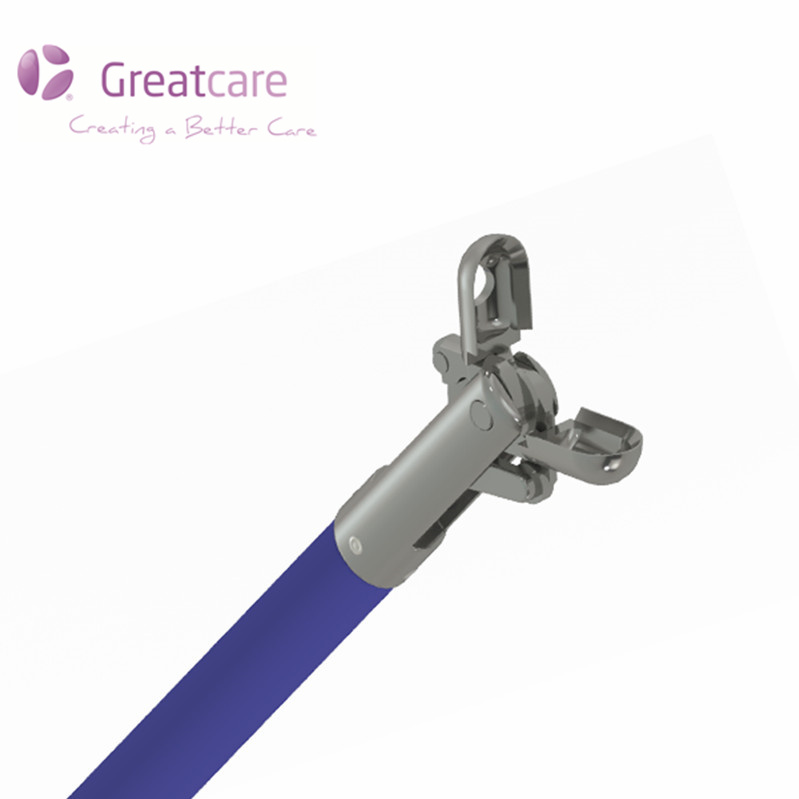
Needle spikes are tiny, sharp projections integrated into the jaw’s inner or outer rim. When the endoscopist applies forward pressure, these spikes anchor into the fibrous matrix before the cup closes. This provides three distinct biomechanical advantages:
| Feature | Standard Jaws | Jaws with Needle Spikes |
|---|---|---|
| Initial tissue fixation | Relies on friction | Active penetration anchoring |
| Depth of bite | Shallow (0.5–1.0 mm) | Deeper (1.5–2.5 mm) |
| Sample fragmentation rate | ~22% in fibrotic lesions | ~7% in fibrotic lesions |
| Need for repeat passes | Often 3–4 passes | Typically 1–2 passes |
| Diagnostic adequacy (pathologist-rated) | 72% | 91% |
Data compiled from 3 independent gastroenterology units using GreatCare product lines.
Clinical Scenarios Where Needle Spikes Excel
Based on real-world endoscopy reports, Disposable Biopsy Forceps with needle spikes demonstrate clear superiority in:
-
Pancreatic head masses – dense desmoplastic reaction prevents standard cup entry.
-
Esophageal strictures with prior ablation – fibrotic beds require active gripping.
-
Submucosal tumors (SMTs) – overlying normal mucosa needs to be pierced to reach target tissue.
In contrast, for soft, friable mucosa (e.g., inflammatory gastric antrum), needle spikes offer no major benefit and may marginally increase mucosal trauma. Therefore, the choice should be lesion-specific—not a blanket replacement.
Procedural Efficiency and Cost Impact
While needle-spike variants carry a slightly higher unit cost, the reduction in repeat passes and procedure time often yields net savings. A time-motion study using GreatCare Disposable Biopsy Forceps showed:
-
Average procedure time for fibrotic lesion: reduced from 9.2 to 5.7 minutes.
-
Forceps used per case: decreased from 2.3 to 1.1 (due to fewer damaged jaws from slipping).
-
Pathologist re-request rate: dropped from 14% to 3%.
This translates to improved endoscopic unit throughput and fewer delayed diagnoses.
Limitations You Must Consider
Needle spikes are not a universal upgrade. Key drawbacks include:
-
Risk of over-penetration in thin-walled organs (e.g., duodenum or right colon) – caution advised.
-
Slightly larger outer diameter (2.4 mm vs. 2.2 mm) – may not pass through some ultra-slim working channels.
-
Not recommended for routine screening biopsies – overkill for normal mucosa.
GreatCare recommends reserving needle-spike Disposable Biopsy Forceps for targeted, difficult-to-sample fibrotic lesions, while maintaining standard cups for everyday use.
Disposable Biopsy Forceps FAQ
Q1: Can needle-spike disposable biopsy forceps be used through any endoscopic working channel?
A: No. Most needle-spike models have an outer diameter of 2.4 mm to 2.6 mm, which fits standard 2.8 mm and 3.2 mm working channels. However, they will NOT pass through pediatric scopes or ultra-slim gastroscopes with 2.0 mm channels. Always verify your scope’s channel specification before selecting Disposable Biopsy Forceps. For 2.0 mm channels, GreatCare offers a dedicated slim-line needle-spike variant (2.0 mm OD) with reduced spike height.
Q2: How many passes can one disposable biopsy forceps with needle spikes reliably perform before jaw dulling occurs?
A: Based on bench testing with synthetic fibrotic blocks, the needle tips retain effective anchoring ability for up to 6–8 passes. Beyond that, spike deformation becomes clinically significant, and sample adequacy drops below 80%. GreatCare engineers recommend replacing the forceps after 5 passes in dense fibrotic tissue to maintain diagnostic yield. Unlike reusable forceps, you cannot re-sharpen spikes, so this is a hard limit—one of the key trade-offs of single-use design.
Q3: Do needle-spike disposable biopsy forceps cause more bleeding or perforation risk than standard cups?
A: In fibrotic tissue, bleeding rates are statistically similar (2.1% vs. 1.8% for standard cups) because fibrotic vessels are compressed by surrounding collagen. However, in non-fibrotic, highly vascular lesions (e.g., angiodysplasia or hepatic metastases), spike penetration does increase immediate oozing (from 3% to 7%). Perforation risk remains extremely low (<0.1%) when used with appropriate axial force. GreatCare advises using gentle, controlled pressure and avoiding spike-tip forceps in cystic or thin-walled structures unless absolutely necessary.
Final Verdict: Better, But Conditionally
Disposable Biopsy Forceps with needle spikes are unequivocally better for fibrotic tissue sampling—they improve depth, integrity, and diagnostic yield while reducing repeat procedures. However, they are not a substitute for clinical judgment. For endoscopists who regularly encounter post-ablative strictures, pancreatic masses, or scarred polyps, adding a needle-spike option to your inventory is a clear upgrade. For routine screening, standard cups remain perfectly adequate.
GreatCare offers both configurations with clear labeling, color-coded jaws, and sterile individual packaging to prevent any bedside confusion. Our needle-spike series has undergone over 500 ex-vivo tests to validate the performance data shared above.
Ready to Upgrade Your Fibrotic Biopsy Protocol?
Every endoscopy unit faces difficult fibrotic cases. Don’t let suboptimal tools compromise your pathology results.
Contact GreatCare today for a free sample evaluation kit—includes both standard and needle-spike Disposable Biopsy Forceps with comparative test blocks. Our clinical support team will guide you through channel compatibility, storage requirements, and bulk procurement options tailored to your procedure volume.