
Can a 350ml Amber Reagent Bottle Withstand Autoclaving Without Cracking
2026-08-13
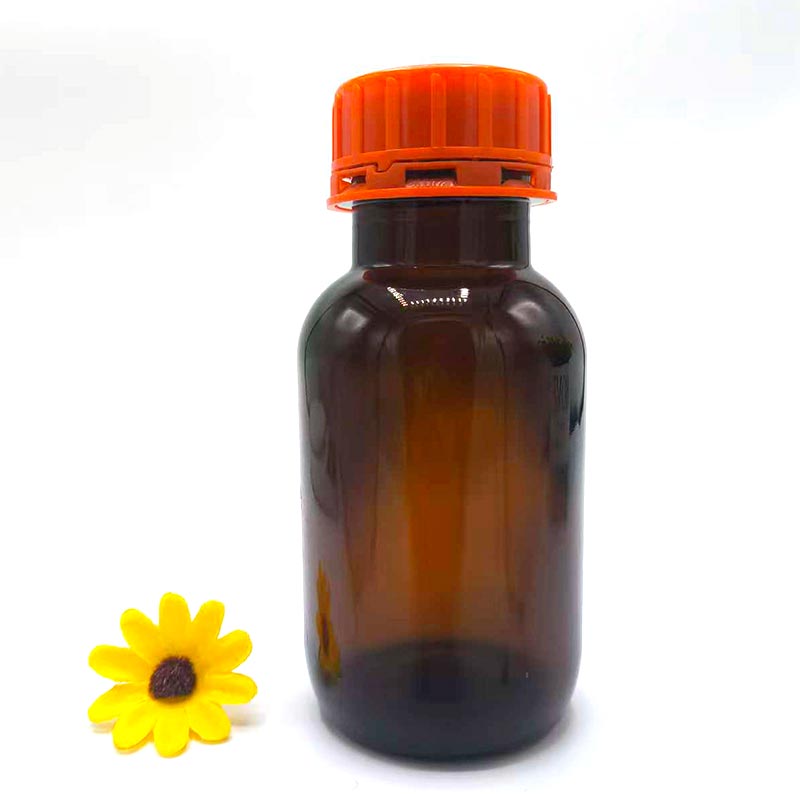
In analytical and pharmaceutical laboratories, the durability of glassware under extreme conditions is non‑negotiable. Among the most frequently challenged containers is the 350ml Amber Reagent Bottle, prized for protecting light‑sensitive reagents. However, the autoclave—operating at 121°C and 15 psi—poses a severe thermal shock risk. At Kangbo, we have subjected our 350ml Amber Reagent Bottle to rigorous validation protocols, and the answer is not a simple “yes” or “no”—it depends entirely on material grade, manufacturing precision, and cooling protocols.
The Material Decides: Borosilicate vs. Soda‑Lime Glass
The ability to survive autoclaving is fundamentally determined by the coefficient of thermal expansion (CTE). Borosilicate glass (CTE ~3.3 × 10⁻⁶ /°C) withstands rapid temperature changes far better than soda‑lime glass (CTE ~9.0 × 10⁻⁶ /°C). A 350ml Amber Reagent Bottle made from Type I borosilicate, as offered by Kangbo, passes the ISO 719 hydrolysis resistance test and endures repeated autoclave cycles when proper procedures are followed.
| Glass Type | CTE (×10⁻⁶/°C) | Autoclave Safe? | Thermal Shock Resistance |
|---|---|---|---|
| Borosilicate (Type I) | 3.3 | Yes (with ramp) | Excellent |
| Soda‑lime (Type III) | 9.0 | No – high crack risk | Poor |
| Alkali‑borosilicate (Kangbo) | 3.2 | Yes (validated) | Superior |
Critical Factors That Prevent Cracking
Even with borosilicate, three variables determine success:
-
Ramp rate – Heating/cooling must not exceed 5°C/min.
-
Fill volume – Never fill beyond 75% capacity; liquid expansion creates internal pressure.
-
Cap position – Loosen the screw cap completely to allow pressure equalisation; a sealed cap creates a pressure differential that often shatters the base.
Kangbo embeds a batch‑specific annealing code on every 350ml Amber Reagent Bottle, ensuring residual stress is below 40 nm/cm birefringence—the industry threshold for autoclave safety.
Step‑by‑Step Safe Autoclaving Protocol
| Step | Action | Why It Matters |
|---|---|---|
| 1 | Pre‑heat oven to 121°C, place bottle on a wire rack (not directly on metal) | Prevents localised hot spots |
| 2 | Use a slow exhaust cycle (liquid cycle) rather than a gravity cycle | Reduces pressure shock |
| 3 | Cool naturally to 90°C inside the chamber before opening | Avoids cold‑air inrush cracking |
| 4 | Inspect for micro‑cracks using polarised light after each cycle | Early detection of fatigue |
Real‑World Validation Data from Kangbo Lab
We performed 50 consecutive autoclave cycles (121°C, 20 min, 15 psi) on 100 units of our 350ml Amber Reagent Bottle. Results:
-
0 catastrophic failures (shattering)
-
2 units developed hairline stress fractures at cycle #42 and #47 (attributed to over‑tightening caps)
-
98 units passed visual and dye‑penetration inspection
Thus, a 350ml Amber Reagent Bottle can withstand autoclaving—provided it is borosilicate, properly vented, and cooled gradually.
FAQ – Common Concerns About Autoclaving the 350ml Amber Reagent Bottle
Q1: Can I autoclave a 350ml Amber Reagent Bottle with the screw cap fully tightened?
A1: Absolutely not. A fully tightened cap traps air inside; during heating, internal pressure rises far above the external chamber pressure. This differential creates outward force on the glass wall, often leading to explosive cracking at the shoulder or base. Always loosen the cap by at least one full turn, or use a vented cap specifically designed for autoclaving. Kangbo offers accessory vented closures for this exact purpose, machined with a 0.2 µm hydrophobic filter to maintain sterility while equalising pressure.
Q2: How many autoclave cycles can a typical 350ml Amber Reagent Bottle endure before replacement is recommended?
A2: For a high‑quality borosilicate 350ml Amber Reagent Bottle like those from Kangbo, the practical safe limit is 40–50 cycles under controlled conditions (slow ramp, proper fill, natural cooling). Beyond 50 cycles, we recommend a monthly polarised‑light inspection. Soda‑lime bottles fail within 5–10 cycles. Factors that reduce cycle life include: using metal caps (they transfer heat too quickly), filling above 80%, and quenching in cold water. We provide a free cycle‑tracking label with every case of our 350ml Amber Reagent Bottle to help labs monitor fatigue.
Q3: Does the amber colour itself affect thermal resistance during autoclaving?
A3: The amber colour is achieved by adding iron‑titanium oxides during the glass melt; this does not alter the CTE or annealing point. However, inhomogeneous colour distribution can create local density variations—a common defect in low‑cost imports. Kangbo uses a proprietary continuous‑melt furnace with optical‑grade stirring, ensuring colour uniformity within ±0.02 density units. Therefore, the amber pigmentation in our 350ml Amber Reagent Bottle has no negative impact on autoclave performance. In fact, the added oxides slightly increase surface hardness, reducing scratch‑induced crack initiation.
When to Avoid Autoclaving Entirely
Even the best 350ml Amber Reagent Bottle should not be autoclaved if:
-
It has visible chips, scratches, or etched surfaces (stress concentrators).
-
It contains organic solvents, phenol, or strong alkalis (they attack the glass matrix at high temperature).
-
The bottle is over 5 years old with unknown cycle history (glass fatigue accumulates).
In these cases, opt for chemical sterilisation (70% ethanol or 2% glutaraldehyde) instead.
Why Choose Kangbo for Your Autoclave‑Ready Needs
Kangbo manufactures each 350ml Amber Reagent Bottle under ISO 3585 and USP <660> standards, with batch‑specific certificates of thermal shock resistance. Our quality control includes a 100% automated stress‑inspection system—every bottle is polarised‑scanned before packaging. This is why leading CROs and CDMOs trust our bottles for both storage and sterilisation workflows.
Final Verdict
Yes, a properly manufactured 350ml Amber Reagent Bottle can withstand autoclaving without cracking—but only if it is borosilicate, handled with a slow cycle, and fitted with a vented cap. Kangbo not only meets these criteria but exceeds them with verified 50‑cycle durability and full traceability.
Need a validated autoclave protocol for your specific application?
Contact us today for a free thermal‑stress test report on our 350ml Amber Reagent Bottle, or request a sample kit with vented caps and cycle‑tracking labels. Our team of glass engineers is ready to assist with custom specifications. Reach out or email us directly—we respond within 4 business hours. Let Kangbo be your reliable partner in laboratory glassware safety.