

How Can an Endoscope Channel Cleaning Brush Improve Reprocessing Efficiency?
2026-09-01
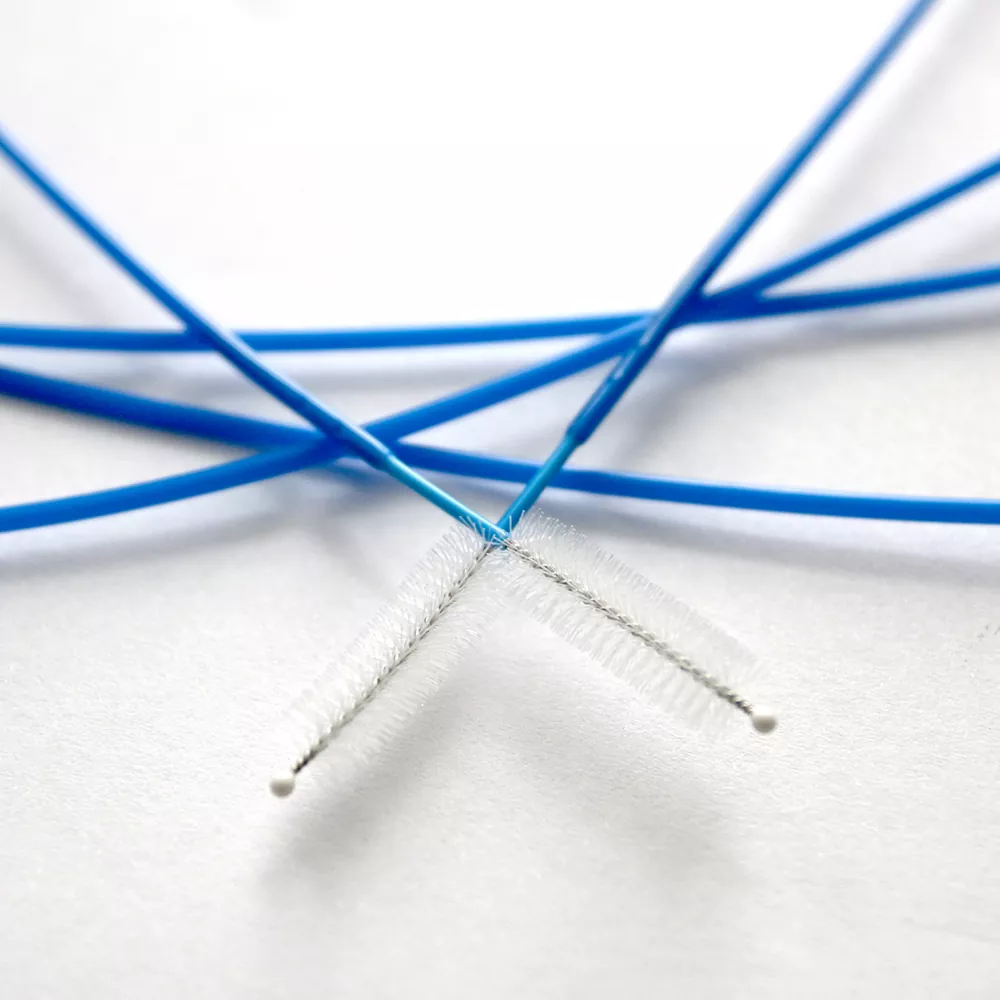
In modern endoscopy departments, effective cleaning is a critical part of instrument reprocessing. Endoscope channels are narrow, long, and difficult to inspect, allowing organic residues and other contaminants to remain inside if cleaning is incomplete. An Endoscope Channel Cleaning Brush is designed to mechanically loosen and remove residues from internal channels, helping cleaning personnel achieve more consistent results before subsequent disinfection or sterilization procedures. Manual brushing and flushing are widely recognized as important parts of endoscope reprocessing because residual debris can interfere with later processing and contribute to biofilm formation.
For hospitals, endoscopy centers, medical distributors, and OEM customers, choosing the right brush involves more than simply selecting a brush with suitable bristles. Channel diameter, working length, brush-head configuration, flexibility, tip design, and compatibility with the intended endoscope all influence practical performance. Qingdao Lushua Medical Technology Co., Ltd. focuses on medical cleaning solutions and provides customizable Endoscope Channel Cleaning Brush options designed to meet different application requirements.
Why Is an Endoscope Channel Cleaning Brush Important?
The internal channel of an endoscope can contain residual biological material after a procedure. Because these channels are narrow and extended, wiping the external surface alone cannot provide sufficient cleaning. A properly selected brush provides mechanical contact with the internal wall, helping loosen residues that flushing alone may not remove.
The brush should be selected according to the endoscope manufacturer's instructions and the actual channel dimensions. Commercial channel brushes are available in different working lengths, brush diameters, catheter diameters, and configurations. For example, existing products commonly include working lengths around 1,000–2,300 mm and different brush-head sizes for different channel diameters.
A suitable brush can support:
-
Removal of organic residues from internal channels
-
More thorough mechanical cleaning
-
Consistent cleaning procedures
-
Reduced risk of leaving visible debris before further reprocessing
-
More efficient handling of different endoscope channel configurations
-
Better compatibility between the cleaning accessory and the endoscope
What Makes a High-Performance Channel Cleaning Brush?
A professional Endoscope Channel Cleaning Brush should combine appropriate dimensions with controlled mechanical cleaning performance. Soft or semi-soft nylon bristles are commonly used because they can provide effective contact with the channel wall while reducing the risk of unnecessary abrasion when the correct brush is selected.
Several design elements deserve particular attention:
| Design Factor | Why It Matters |
|---|---|
| Brush Diameter | Should correspond to the target channel size |
| Working Length | Must be sufficient to reach the required channel section |
| Bristle Material | Provides mechanical cleaning action |
| Shaft Flexibility | Helps the brush navigate long internal channels |
| Tip Design | Can help reduce the possibility of channel damage |
| Brush Configuration | Single-ended or dual-ended designs support different procedures |
| Handle/Shaft Surface | Can improve handling in wet cleaning environments |
Manufacturers also offer single-ended, dual-ended, bilateral, and other configurations. The appropriate choice depends on the intended endoscope, channel structure, and validated reprocessing procedure.
How Does It Work During Endoscope Reprocessing?
An Endoscope Channel Cleaning Brush is generally introduced through the appropriate channel opening and advanced carefully through the channel according to the endoscope manufacturer's cleaning instructions. The brush mechanically contacts the internal surface while the endoscope is immersed or treated with the specified cleaning solution, depending on the applicable procedure.
A typical workflow includes:
-
Select the correct brush according to channel diameter and required working length.
-
Prepare the cleaning solution according to the applicable reprocessing instructions.
-
Insert the brush carefully into the designated channel.
-
Advance it through the channel without applying excessive force.
-
Remove the brush carefully and inspect it for visible debris where required.
-
Repeat the cleaning procedure according to the validated protocol.
-
Continue with subsequent rinsing, disinfection, or sterilization steps as applicable.
Instructions for use from medical brush manufacturers emphasize selecting a brush appropriate for the channel and avoiding excessive force during insertion or withdrawal.
The exact cleaning sequence should always follow the endoscope manufacturer's instructions and the applicable healthcare facility protocol. A brush should never be forced through a blocked or unsuitable channel.
Customization: A Key Advantage for Different Endoscope Applications
One major advantage offered by Qingdao Lushua Medical Technology Co., Ltd. is customization for different endoscope channel requirements.
Endoscopes are not necessarily identical in channel diameter, channel length, internal configuration, or intended application. A standard brush may therefore not be the ideal solution for every customer. Customization can help medical device distributors and OEM buyers develop a brush specification that better matches their target application.
Qingdao Lushua Medical Technology Co., Ltd. can support customized requirements such as:
-
Customized brush diameter
-
Customized working length
-
Customized shaft dimensions
-
Customized bristle diameter and configuration
-
Single-ended or double-ended structures
-
Different handle designs
-
Customized packaging
-
Private-label and OEM requirements
-
Application-specific brush configurations
This flexibility is particularly valuable for distributors serving multiple markets. Instead of relying on one universal specification, customers can develop different brush models for different endoscope channels.
Why Choose Qingdao Lushua Medical Technology Co., Ltd.?
For international buyers, product consistency and customization capability are important considerations when sourcing medical cleaning accessories. Qingdao Lushua Medical Technology Co., Ltd. focuses on providing practical solutions for professional medical applications, with an emphasis on product design, manufacturing requirements, and customer-specific specifications.
Its customized Endoscope Channel Cleaning Brush solution can help customers address different channel sizes and application scenarios while supporting OEM-oriented procurement.
The key advantages include:
1. Flexible Product Specifications
Different working lengths, brush diameters, and structural configurations can be considered according to customer requirements.
2. OEM Customization Support
Customers can communicate their product drawings, technical specifications, packaging requirements, or application needs for customized development.
3. Application-Oriented Design
The brush structure can be selected according to the intended endoscope channel rather than relying solely on a standard specification.
4. Suitable for International B2B Procurement
Customized packaging, labeling, and product configurations can help distributors develop products for their own markets.
Standard Brush vs. Customized Brush
| Feature | Standard Brush | Customized Brush |
|---|---|---|
| Channel Compatibility | Fixed specifications | Designed around specified requirements |
| Working Length | Limited options | Customizable |
| Brush Diameter | Standard sizes | Application-specific |
| Branding | Usually limited | OEM/private-label options |
| Packaging | Standard packaging | Customized packaging available |
| Distributor Flexibility | Moderate | High |
| Suitable for Special Applications | Limited | Better suited to specific requirements |
For customers purchasing large quantities or serving specialized endoscopy markets, customization can provide greater flexibility in product selection and supply-chain planning.
What Should Buyers Consider Before Ordering?
When sourcing an Endoscope Channel Cleaning Brush, buyers should provide as much technical information as possible. This helps the manufacturer recommend or develop a more appropriate specification.
A useful purchasing checklist includes:
-
Target endoscope type
-
Internal channel diameter
-
Required working length
-
Preferred brush-head diameter
-
Single-ended or dual-ended design
-
Bristle material and softness requirements
-
Shaft material or coating requirements
-
Disposable or reusable application
-
Packaging requirements
-
OEM/private-label requirements
-
Target market and applicable compliance requirements
The most important point is compatibility. A cleaning brush should not be selected simply because its overall size appears suitable. The endoscope manufacturer's instructions should be followed, and the brush should be appropriate for the specific channel.
Better Cleaning Starts with the Right Brush
An Endoscope Channel Cleaning Brush is a relatively small medical accessory, but its role in endoscope reprocessing is significant. Proper mechanical cleaning can help remove residues from difficult-to-access internal channels and prepare the instrument for subsequent reprocessing stages. Research on endoscope reprocessing has also highlighted the importance of effective channel cleaning because remaining debris may compromise later processing.
For hospitals, distributors, medical equipment suppliers, and OEM brands, the ideal solution is not necessarily the largest or most complex brush. It is the brush whose dimensions, bristle structure, working length, and configuration are correctly matched to the intended application.
With flexible customization capabilities, Qingdao Lushua Medical Technology Co., Ltd. can help customers develop Endoscope Channel Cleaning Brush solutions for different channel specifications and OEM requirements. Whether you need a standard configuration, a customized brush size, or a private-label product for your market, the right specification can make procurement and application more efficient.
Looking for a customized Endoscope Channel Cleaning Brush for your endoscopy products or distribution business? Contact Qingdao Lushua Medical Technology Co., Ltd. to discuss your required channel size, working length, brush configuration, packaging, and OEM specifications. Contact us today for professional product consultation and a customized solution.