
How Does a Duodenal Endoscopic Brush Improve Targeted Sampling in GI Procedures?
2026-09-22
During gastrointestinal endoscopy, obtaining representative cellular material from the duodenum can be important when clinicians need additional information about abnormal mucosa, lesions, strictures, inflammatory changes, or other suspicious areas. A Duodenal Endoscopic Brush is designed to pass through an endoscope's working channel and gently contact the target surface to collect cellular material for cytological or other laboratory analysis. Duodenal brushing is an established specimen-collection approach, and clinical laboratory protocols specifically recognize duodenal brush specimens for cytology.
For medical device buyers, distributors, and endoscopy solution providers, product design is about more than basic sampling. Brush flexibility, catheter performance, brush-head structure, compatibility, handling, and customization can all affect practical usability. Qingdao Lushua Medical Technology Co., Ltd. focuses on developing medical sampling solutions with an emphasis on practical endoscopic application and customized manufacturing. In particular, its ability to support boat-shaped customization provides an additional option for buyers seeking differentiated brush-head configurations for specific application requirements.
What Is a Duodenal Endoscopic Brush?
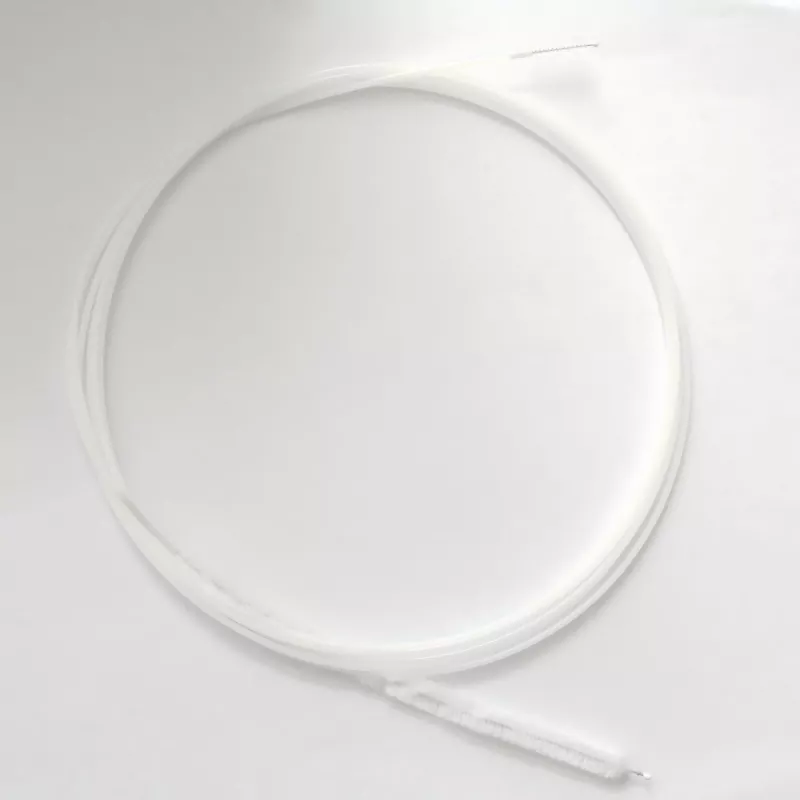
A Duodenal Endoscopic Brush is an endoscopic accessory used to collect cellular material from the duodenal or gastrointestinal tract under direct visualization.
The device generally consists of several functional components:
- Flexible catheter or sheath
- Brush head with medical-grade bristles
- Internal guide wire
- Sliding or ergonomic handle
- Protective sheath structure
- Distal brush configuration
During use, the brush is advanced through the endoscope channel toward the target area. The brush can then be extended and gently moved against the mucosal surface to collect cellular material before being retracted. Similar cytology brushes are designed for upper and lower gastrointestinal endoscopy and are available in different sheath lengths, brush diameters, and working-channel requirements.
This structure allows sampling to take place under endoscopic visualization rather than relying only on external examination.
Why Is Targeted Duodenal Sampling Important?
One major advantage of endoscopic brushing is the ability to obtain material directly from a visually identified target.
Brush cytology can cover a relatively broad surface area and may be useful when sampling strictures or areas where conventional forceps sampling is difficult. It is generally considered complementary to biopsy rather than a universal replacement for tissue biopsy.
Depending on the clinical situation, collected material may support laboratory evaluation for cellular abnormalities and other pathological findings. The specific diagnostic value depends on the sampling site, collection technique, specimen quality, and subsequent laboratory processing.
Key Functions of a Duodenal Endoscopic Brush
| Function | Practical Value |
|---|---|
| Targeted cell collection | Obtains cellular material from a selected area |
| Endoscopic access | Passes through the working channel of a compatible scope |
| Surface brushing | Enables controlled contact with the mucosal surface |
| Specimen transfer | Allows collected material to be transferred for laboratory analysis |
| Customized configuration | Supports different clinical and device requirements |
Proper specimen handling is also essential. Laboratory protocols commonly require the collected brush or material to be placed into an appropriate cytology preservative or transport medium, with accurate specimen identification.
What Makes an Effective Duodenal Endoscopic Brush?
Performance depends on the interaction between the brush head, catheter, endoscope, and target tissue. A practical design should balance sampling efficiency with controlled handling.
1. Flexible Catheter Design
A flexible catheter helps the brush navigate through the endoscope and reach the intended position. Appropriate flexibility can contribute to smoother advancement while maintaining sufficient control during sampling.
2. Controlled Brush Contact
The bristle structure should provide effective contact with the target surface without unnecessarily aggressive manipulation. Brush characteristics can influence the amount and quality of cellular material obtained.
3. Smooth Distal Structure
A well-designed distal end can facilitate advancement and reduce unnecessary mechanical irritation during positioning. Medical cytology brush designs commonly emphasize controlled brush-head structures and appropriate bristle characteristics.
4. Convenient Operation
An ergonomic handle and reliable brush extension/retraction mechanism can make operation more predictable for trained medical professionals.
How Does Boat-Shaped Customization Add Value?
For buyers with specialized endoscopic sampling requirements, standardized brush shapes may not always be sufficient. This is where boat-shaped customization can become an important product-development advantage.
Qingdao Lushua Medical Technology Co., Ltd. supports boat-shaped customization, allowing the brush-head configuration to be developed according to customer requirements rather than being limited to a single standard geometry.
The boat-shaped design concept can provide a distinctive profile for application-specific development, packaging differentiation, or integration into a customer's own medical-device solution. Depending on the required specifications, customization may involve:
- Brush-head shape
- Brush dimensions
- Bristle arrangement
- Catheter length
- Working-channel compatibility
- Handle configuration
- Packaging requirements
- OEM/ODM product specifications
This customization capability is particularly valuable for medical distributors, endoscopy-equipment manufacturers, and healthcare product companies looking to develop differentiated product lines.
Customization should always be evaluated against the intended clinical application, compatible endoscope specifications, applicable regulatory requirements, and validated product performance.
Duodenal Endoscopic Brush vs. Conventional Biopsy Sampling
A brush and biopsy forceps perform different sampling functions, so the choice depends on the clinical objective.
| Aspect | Endoscopic Brush | Biopsy Forceps |
|---|---|---|
| Main material collected | Cellular material/surface sample | Tissue fragment |
| Sampling approach | Brushing surface | Grasping tissue |
| Surface coverage | Can sample a broader surface area | More localized tissue sample |
| Stricture applications | Can be useful where forceps access is difficult | May be technically challenging in some strictures |
| Pathology role | Often complementary | Important for histological evaluation |
| Product customization | Brush shape and configuration can be customized | Forceps geometry and jaw design are typically customized differently |
Clinical protocols emphasize that brushing cytology and biopsy are complementary approaches, and specimen quality depends heavily on correct collection and processing.
What Are the Practical Effects of Better Brush Design?
A well-engineered Duodenal Endoscopic Brush can improve the overall sampling workflow by making the device easier to position, operate, and retrieve.
The potential practical effects include:
- More controlled sampling – A suitable brush-head structure supports consistent contact with the target area.
- Improved handling – A flexible catheter and ergonomic handle can facilitate operation.
- Efficient specimen collection – Appropriate bristle design can help capture cellular material.
- Application flexibility – Different brush configurations can accommodate different endoscopic requirements.
- Customized product development – Boat-shaped customization enables buyers to pursue application-specific designs.
However, device performance should be demonstrated through appropriate verification and validation rather than assumed solely from geometry or appearance.
Why Choose Qingdao Lushua Medical Technology Co., Ltd.?
For B2B medical-device buyers, product customization can be just as important as the standard product itself. Qingdao Lushua Medical Technology Co., Ltd. provides an opportunity for customers seeking customized endoscopic sampling products with differentiated configurations.
Its Duodenal Endoscopic Brush solution can be positioned around several purchasing considerations:
- Customized brush-head development
- Support for boat-shaped customization
- Application-oriented product design
- OEM/ODM cooperation
- Flexible product specifications
- Professional medical-device manufacturing support
For distributors and medical-device brands, customized geometry can also help create product differentiation while aligning the brush with specific market requirements.
How Should Buyers Evaluate a Duodenal Endoscopic Brush?
Before purchasing or developing a product, buyers should consider more than price. A practical evaluation checklist includes:
- Is the brush compatible with the intended endoscope working channel?
- Is the catheter length appropriate?
- Does the brush configuration meet the intended sampling requirements?
- Are the bristles and distal structure appropriately designed?
- Is the product supplied sterile and disposable when required?
- Can the manufacturer provide customization?
- Can the supplier support boat-shaped brush customization?
- Are the required quality and regulatory documents available?
- Can the supplier support OEM/ODM production?
These considerations help buyers distinguish between a generic sampling accessory and a product developed around a specific endoscopic application.
Conclusion
A Duodenal Endoscopic Brush is an important accessory for targeted gastrointestinal specimen collection under endoscopic visualization. Its flexible access, controlled brushing mechanism, and compatibility with cytological workflows make it useful for selected sampling applications, while clinical evidence and laboratory protocols show that brushing can complement other diagnostic sampling methods.
For buyers seeking more than a standard configuration, Qingdao Lushua Medical Technology Co., Ltd. combines endoscopic brush development with customization capabilities. Its support for boat-shaped customization offers an additional route for customers requiring distinctive brush-head designs, OEM/ODM solutions, and application-specific product development.
If you are looking for a customized Duodenal Endoscopic Brush, including boat-shaped customization for your product requirements, contact us to discuss your specifications, application needs, and OEM/ODM cooperation opportunities.