

How Does an Endoscope Reprocessing Brush Improve Manual Cleaning Efficiency?
2026-08-27
Effective endoscope reprocessing is essential for maintaining patient safety, protecting medical equipment, and supporting consistent infection-control procedures. Among the tools used during manual cleaning, the Endoscope Reprocessing Brush plays a critical role in removing blood, tissue, mucus, and other organic residues from narrow and difficult-to-access channels. Professional guidelines recommend using brushes that are appropriately sized for the endoscope channel so that the bristles can contact the internal surfaces effectively. For hospitals, endoscopy centers, and medical distributors, choosing a reliable brush is therefore not simply a purchasing decision—it is an important part of a standardized reprocessing workflow.
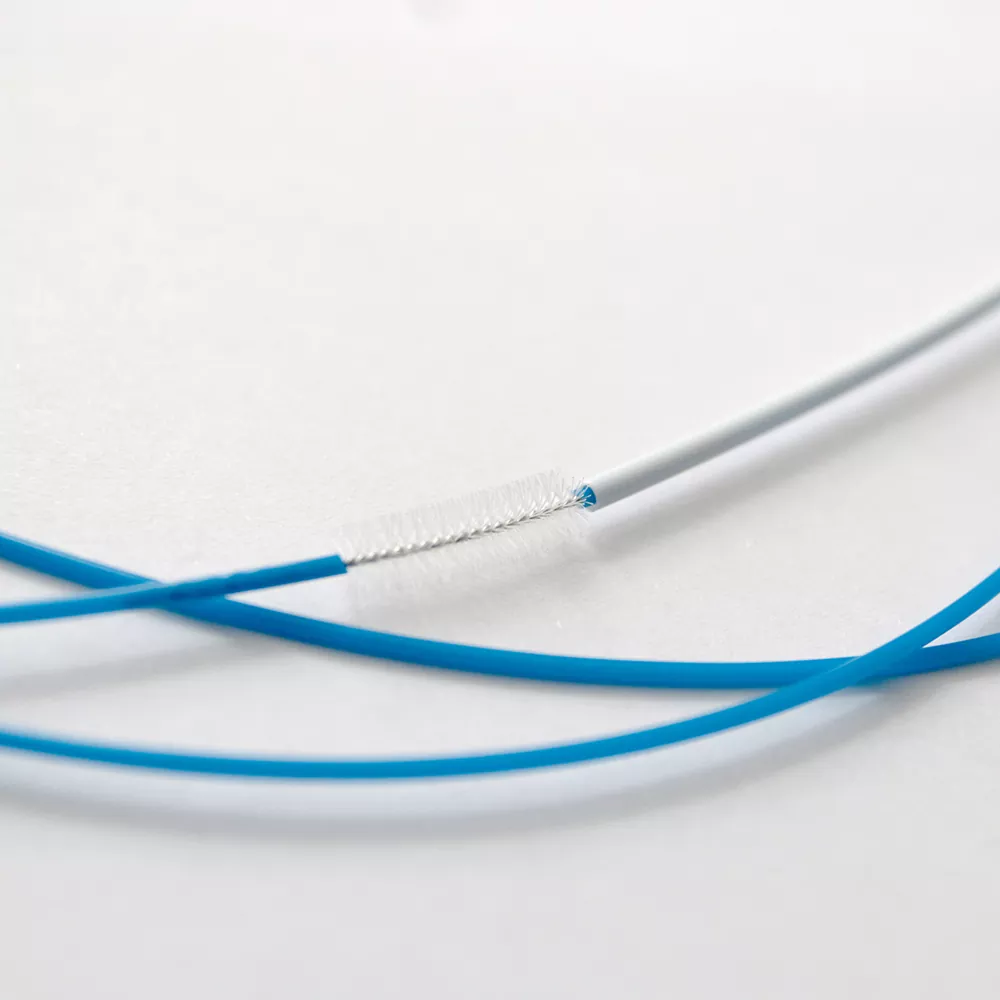
What Is an Endoscope Reprocessing Brush?
An Endoscope Reprocessing Brush is a specialized medical cleaning tool designed to mechanically remove contaminants from endoscope channels, ports, connectors, valves, and other hard-to-clean areas.
Unlike ordinary cleaning brushes, professional endoscope brushes are designed around the small internal dimensions and delicate structures of endoscopic equipment. The brush should provide sufficient flexibility to pass through narrow channels while maintaining appropriate contact between the bristles and channel walls.
According to multisociety guidance, accessible endoscope channels should be flushed and brushed during manual cleaning, and the brush size should correspond to the specific channel or component being cleaned.
Why Is the Brush Important in Endoscope Reprocessing?
Manual cleaning is a fundamental stage before high-level disinfection or sterilization. If organic material remains inside an endoscope channel, subsequent disinfection may become less effective and residues may contribute to biofilm formation.
A properly designed brush helps provide:
-
Mechanical removal of organic residues
-
Better access to narrow internal channels
-
More consistent manual cleaning
-
Reduced risk of residue accumulation
-
Improved compatibility with standardized reprocessing procedures
-
Greater operational efficiency for medical staff
The key is not simply to brush a channel, but to use a brush with the correct diameter, length, flexibility, and bristle configuration for the specific endoscope and cleaning application.
What Makes a High-Quality Endoscope Reprocessing Brush Effective?
A professional brush should balance cleaning performance with protection of the endoscope.
| Key Feature | Why It Matters |
|---|---|
| Appropriate brush diameter | Helps the bristles contact the channel wall |
| Flexible shaft | Facilitates passage through curved channels |
| Effective bristles | Supports mechanical removal of residues |
| Suitable brush length | Allows access to the required channel depth |
| Smooth construction | Helps minimize unnecessary abrasion |
| Reliable handle | Provides better control during manual cleaning |
| Model-specific compatibility | Supports correct use according to the manufacturer's IFU |
Current reprocessing recommendations emphasize that cleaning brushes should be appropriately sized for the endoscope channel and approved for the intended application.
How Does It Improve the Reprocessing Workflow?
A well-matched Endoscope Reprocessing Brush can make manual cleaning more systematic.
A typical workflow includes:
-
Pre-cleaning immediately after the procedure
Removing contamination before it dries helps prevent residues from becoming more difficult to remove. -
Leak testing according to the endoscope manufacturer's instructions
Reprocessing should proceed only when the equipment passes the required inspection. -
Manual cleaning with compatible detergent
The endoscope and detachable components are cleaned according to the applicable IFU. -
Brushing accessible channels
The correctly sized brush is passed through accessible channels to mechanically remove residues. -
Flushing and rinsing
Channels are flushed to remove loosened contaminants and detergent residues. -
Inspection before subsequent disinfection or sterilization
Visual inspection helps verify the condition and cleanliness of the equipment.
Professional guidelines stress that manual cleaning should be performed using model-specific cleaning devices and that all accessible channels should be flushed and brushed.
How Does Qingdao Lushua Medical Technology Support Customization?
For distributors, hospitals, OEM buyers, and medical-device brands, standard products do not always meet every endoscope configuration or purchasing requirement. This is where Qingdao Lushua Medical Technology Co., Ltd. can provide an important advantage: customized Endoscope Reprocessing Brush solutions, including support for customized brush shapes.
The ability to support shape customization allows the brush design to be developed around different cleaning requirements, channel structures, handling preferences, and application scenarios.
Customization may include:
-
Brush shape and configuration
-
Brush head design
-
Brush diameter
-
Working length
-
Shaft length and flexibility
-
Handle configuration
-
Bristle arrangement
-
Packaging and labeling
-
OEM/ODM requirements
This flexibility can be particularly valuable for buyers serving different endoscope models or developing private-label medical cleaning products.
Why Choose a Customized Shape?
A customized brush shape can help address application-specific requirements rather than forcing every cleaning task into a one-size-fits-all design.
For example, different endoscope components may require different approaches to channel access, maneuverability, or handling. Since professional guidance recommends matching the cleaning brush to the size and configuration of the endoscope component, customization can help buyers build a more suitable product specification.
Standard Brush vs. Customized Brush
| Comparison | Standard Brush | Customized Brush |
|---|---|---|
| Shape | Fixed | Can be customized |
| Dimensions | Standard specifications | Adaptable to requirements |
| Application | General cleaning needs | Specific cleaning scenarios |
| Branding | Usually limited | OEM/private-label options |
| Product development | Faster selection | More flexible development |
| Suitable for distributors | Yes | Particularly suitable for differentiated products |
For buyers seeking a long-term product line rather than a single generic item, customized development can create additional opportunities for product differentiation.
What Results Can Users Expect?
When the correct brush is selected and used according to the endoscope manufacturer's instructions, manual brushing can contribute to more thorough removal of visible organic residues and support a consistent reprocessing procedure.
However, the brush should never be considered a replacement for the complete reprocessing process. Proper pre-cleaning, leak testing, detergent use, brushing, flushing, rinsing, inspection, disinfection, and drying should all follow the applicable manufacturer's instructions and institutional protocols.
Cleaning tools should also be disposable or appropriately cleaned and disinfected between uses, depending on their intended design and applicable instructions.
How Can Buyers Select the Right Product?
Before purchasing an Endoscope Reprocessing Brush, buyers should evaluate several technical and commercial factors:
-
Endoscope type and model
-
Internal channel diameter
-
Required brush length
-
Shaft flexibility
-
Bristle material and configuration
-
Single-use or reusable design
-
Compatibility with the intended cleaning process
-
Packaging requirements
-
OEM/ODM requirements
-
Custom shape requirements
-
Supply capacity and quality consistency
For healthcare facilities, correct compatibility should always take priority over price alone. For distributors and medical brands, customization capability, production consistency, packaging support, and responsive technical communication can be equally important.
FAQ
Is an Endoscope Reprocessing Brush reusable?
Some brushes are designed for single use, while others may be reusable. The applicable manufacturer's instructions must be followed. Reusable cleaning tools require appropriate cleaning, inspection, and disinfection between uses.
Can the brush shape be customized?
Yes. Qingdao Lushua Medical Technology Co., Ltd. supports customized brush solutions and can discuss requirements for customized brush shapes, dimensions, configurations, and OEM applications.
Why does brush size matter?
The brush needs to be appropriately matched to the endoscope channel so that the bristles can contact the internal surfaces effectively without compromising the equipment.
Is brushing enough for complete endoscope reprocessing?
No. Brushing is one part of manual cleaning. It should be integrated with pre-cleaning, flushing, rinsing, inspection, and subsequent disinfection or sterilization according to the applicable reprocessing protocol and manufacturer's IFU.
Choose a More Suitable Endoscope Reprocessing Brush
A reliable Endoscope Reprocessing Brush is a small but essential component of professional endoscope cleaning. The right design can support effective mechanical cleaning, improve workflow consistency, and help healthcare professionals meet established reprocessing requirements.
For buyers looking beyond standard specifications, Qingdao Lushua Medical Technology Co., Ltd. offers a strong advantage through flexible customization, including customized brush shapes, dimensions, configurations, packaging, and OEM/ODM solutions. Whether you are a hospital procurement team, medical distributor, or healthcare brand developing a private-label product, a customized solution can help you better match your target application.
Looking for a reliable Endoscope Reprocessing Brush with customized shape and OEM/ODM support? Contact us today to discuss your specifications, application requirements, and customized solution.