
What Are the Exact Dimensions of a Standard 3000ml Brown Reagent Bottle
2026-08-27
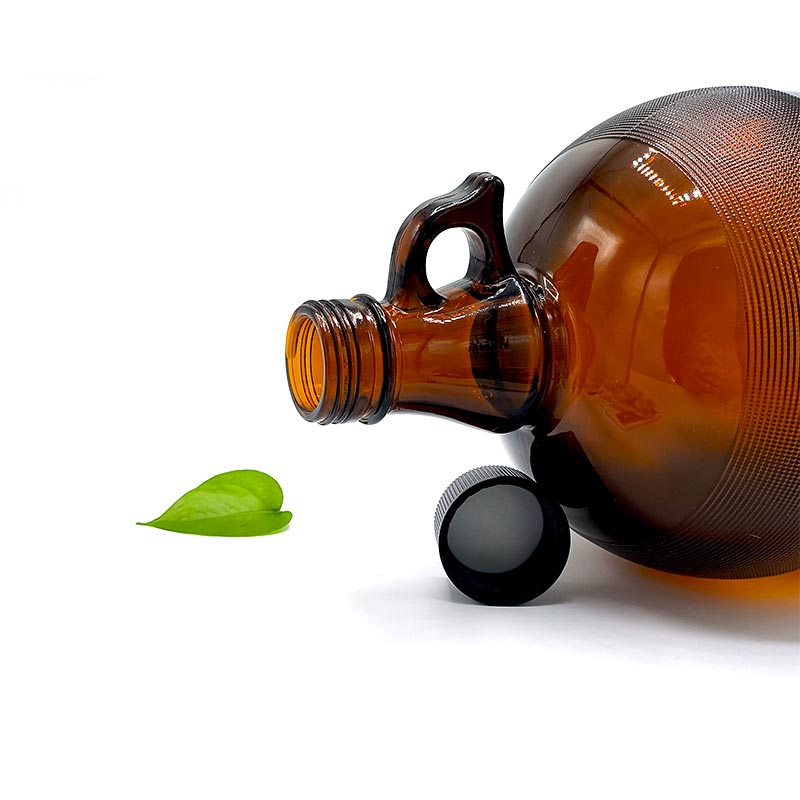
When sourcing laboratory glassware, dimensional accuracy is just as critical as chemical resistance. A 3000ml Brown Reagent Bottle that does not fit your autosampler tray, storage cabinet, or heating mantle can disrupt workflows and compromise sample integrity. For labs that handle light‑sensitive reagents—from iodine solutions to photopolymer precursors—the 3000ml Brown Reagent Bottle from Kangbo combines standardised external dimensions with batch‑to‑batch consistency, ensuring that every unit performs identically under routine and rigorous conditions.
Standard Dimensions – What the Data Sheet Tells You
International manufacturers (including Kangbo) follow DIN/ISO guidelines for narrow‑neck reagent bottles. Below are the verified specifications for a standard 3000ml Brown Reagent Bottle produced to GL45 thread standards. Always confirm with your supplier, as slight variations exist between brands.
| Parameter | Measurement (mm) | Tolerance |
|---|---|---|
| Total height (with cap) | 248 – 252 | ± 2 mm |
| Body outer diameter | 152 – 156 | ± 1.5 mm |
| Neck inner diameter (thread) | 45.0 (GL45) | ± 0.2 mm |
| Neck outer diameter | 50.0 | ± 0.3 mm |
| Base diameter | 150 – 154 | ± 2 mm |
| Wall thickness (side) | 2.8 – 3.2 | ± 0.3 mm |
| Bottom thickness | 4.0 – 5.0 | ± 0.5 mm |
Critical note: The usable internal volume is calibrated at 20 °C; overfilling above the shoulder can cause leakage during temperature fluctuations. Kangbo laser‑etches a fill‑line indicator on each 3000ml Brown Reagent Bottle to eliminate guesswork.
Why These Numbers Matter in Daily Lab Operations
-
Cabinet & rack planning – With a 152 mm diameter, a standard shelf of 160 mm clearance fits one bottle per compartment; two bottles side‑by‑side require at least 310 mm width.
-
Autoclave compatibility – The total height (≈250 mm) allows vertical placement in most bench‑top autoclaves, but always leave 30 mm headspace for steam circulation.
-
Shipping & cryo‑storage – Outer dimensions determine how many units fit into a 5‑gallon pail or insulated shipper. Kangbo offers custom‑cut foam inserts that match these exact measurements.
-
Stirrer clearance – Magnetic stirrer bars (length ≤ 60 mm) rotate freely without touching the curved base, thanks to the 150+ mm base diameter.
Material & Weight – Beyond the Tape Measure
A dry 3000ml Brown Reagent Bottle (borosilicate 3.3 glass) from Kangbo weighs approximately 980 – 1,020 g empty. When filled with water (density 1.0 g/mL), total mass reaches ~4.0 kg. For organic solvents like hexane (density 0.66), the full weight drops to ~3.0 kg—critical for overhead stirrer balancing and ergonomic lifting.
The amber colouration is achieved by adding iron, titanium, and manganese oxides during melting, providing > 90% UV‑blocking below 400 nm without altering internal dimensions. Kangbo tests each batch for wall‑thickness uniformity using ultrasonic gauging, ensuring that the nominal 3.0 mm wall does not thin out near the neck transition—a common failure point in lower‑grade bottles.
3000ml Brown Reagent Bottle – FAQ
Q1: Can I use a 3000ml Brown Reagent Bottle in a microwave or conventional oven for drying?
A: No. Borosilicate glass withstands sudden temperature changes (thermal shock resistance up to ΔT = 120 °C), but microwave heating creates localised hot spots that can exceed the glass's strain point. For oven drying, keep the temperature below 140 °C and always remove the cap—trapped vapour pressure can crack the shoulder. Kangbo recommends using a dedicated drying cabinet with forced air, setting the bottle upside‑down on PTFE racks for complete moisture evacuation.
Q2: What is the exact thread pitch for the cap, and can I use caps from other brands on a 3000ml Brown Reagent Bottle?
A: The GL45 standard defines a thread pitch of 3.0 mm with a 45‑mm nominal inner diameter. Caps from any ISO‑compliant GL45 brand (including Kangbo's own polypropylene caps with bonded PTFE septa) will seal properly. However, the overall height increases by 8‑10 mm when using a capped adapter or dispenser. Always measure the total height after fitting your specific closure—Kangbo provides free 3D CAD files upon request to verify clearance before purchase.
Q3: How do the external dimensions change if I order a 3000ml Brown Reagent Bottle with a wide‑neck (GLS80) version?
A: A wide‑neck variant is not a standard offering for the 3000 ml size from most manufacturers, including Kangbo, because the larger opening requires a thicker rim and reinforced base, pushing the outer diameter to 168‑172 mm and height to 265‑270 mm. This altered footprint rarely fits standard 150‑mm racks. If you need easier powder filling, Kangbo offers an accessory GL45‑to‑80 adapter that increases the effective opening to 70 mm without changing the bottle's external geometry—preserving your existing storage and transport fixtures.
Verifying Your Shipment – A Quick Checklist
| Checkpoint | Action |
|---|---|
| Height | Measure from flat surface to top of cap (not the septum) |
| Diameter | Use calipers at mid‑body, away from mould seams |
| Neck roundness | Rotate the cap—smooth 360° resistance indicates true circle |
| Wall thickness | Tap gently with a metal rod; a clear ring = uniform glass |
| Batch number | Match with Kangbo's online certificate for dimensional compliance |
Final Thought – Why Standardisation Drives Reproducibility
In regulated environments (GLP, GMP, EPA methods), every millimetre affects volumetric accuracy, thermal transfer, and handling safety. The 3000ml Brown Reagent Bottle is not a commodity—it is a precision tool. Kangbo maintains a dedicated metrology lab that recalibrates moulds after every 5,000 units, ensuring that a bottle ordered today matches one purchased five years ago. This commitment transforms dimensional data from a passive specification into an active quality assurance parameter.
Have a unique storage or automation requirement? Contact Kangbo’s technical support team directly with your cabinet drawings or robotic arm specifications—we will send you a verified dimensional drawing and recommend the best cap/liner combination for your solvent type.