

What Are the Exact Sizing Differences Between a Latex Foley Catheter and a Silicone One
2026-07-13
Choosing the right urinary drainage device is a critical clinical decision that directly affects patient comfort, safety, and long-term outcomes. Among the most frequently compared options are the Latex Foley Catheter and its silicone counterpart. While both serve the same fundamental purpose, their sizing characteristics—including French (Fr) gauge, balloon fill volume, internal diameter, and external profile—differ in ways that significantly impact insertion ease, drainage efficiency, and indwelling tolerance. At Greatcare, we manufacture both variants with precision, and we often guide clinicians through these exact dimensional distinctions to ensure optimal device selection for every patient profile.
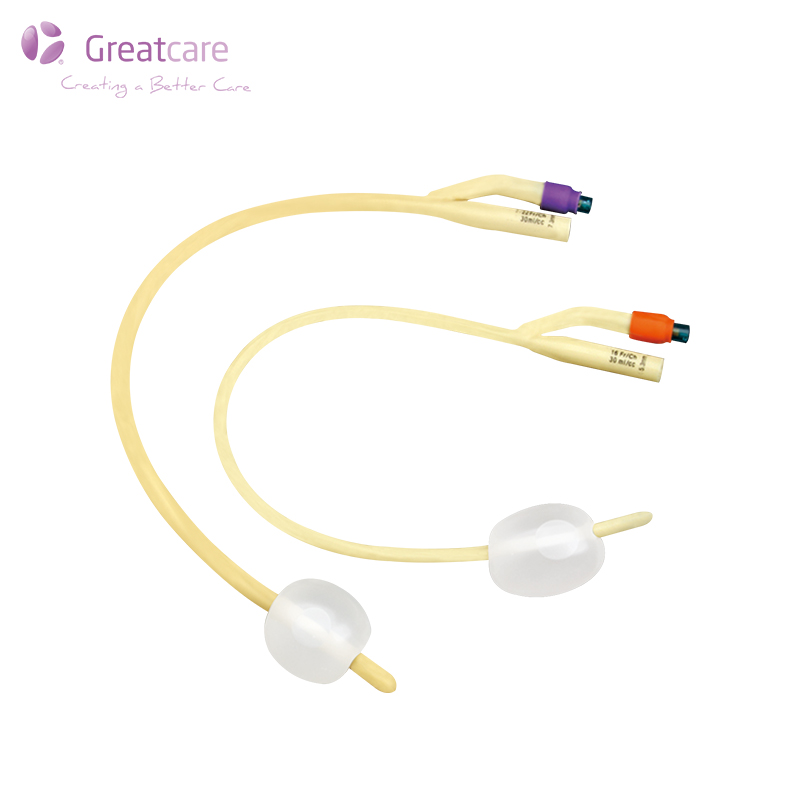
Understanding the French Scale: Not All 16Fr Are Equal
The French scale (1Fr = 1/3 mm) measures the outer circumference of the catheter shaft. However, a Latex Foley Catheter and a silicone catheter labeled with the same Fr size do not necessarily have identical outer diameters. This is due to wall thickness variability.
-
Latex catheters typically have thinner walls because latex is more elastic and tensile-strong, allowing a larger internal lumen for a given outer diameter.
-
Silicone catheters require slightly thicker walls to maintain kink resistance, which can reduce the internal drainage lumen by 0.5–1Fr equivalent.
| Parameter | Latex Foley Catheter (Greatcare) | Silicone Foley Catheter (Greatcare) |
|---|---|---|
| Outer diameter (16Fr) | 5.33 mm (exact) | 5.33 mm (exact) |
| Internal lumen diameter (16Fr) | 2.8 mm | 2.3 mm |
| Wall thickness | 0.9 mm | 1.2 mm |
| Balloon fill volume (standard) | 10 cc (5–10 cc range) | 10 cc (fixed) |
| Balloon inflation diameter (10 cc) | 22–24 mm | 22–24 mm (less compliant) |
| Tip-to-eye distance | 4–5 mm | 6–8 mm |
| Shaft stiffness (Shore A) | 45–55 | 70–80 |
Why Internal Diameter Matters Clinically
The larger internal lumen of a Latex Foley Catheter offers a distinct advantage for high-viscosity urine, hematuria, or sediment-heavy drainage. In contrast, silicone’s smaller lumen can lead to slower flow rates—approximately 15–20% less at the same Fr size. However, silicone’s stiffer shaft provides better kink resistance, which is critical for ambulatory patients or those with obesity where intra-abdominal pressure may collapse a softer latex shaft.
Balloon Behavior: A Critical Sizing Distinction
One of the most overlooked sizing differences lies in balloon compliance.
-
A Latex Foley Catheter balloon expands asymmetrically and can increase in diameter by 2–3 mm when overinflated, potentially causing bladder neck trauma.
-
A silicone balloon is non-compliant—it retains its molded shape and size regardless of fill volume, offering more predictable intravesical positioning.
Greatcare recommends using silicone for long-term indwelling (over 28 days) because the balloon deflates more reliably, whereas latex balloons may lose tensile strength and fail to deflate completely after prolonged exposure to urine.
Insertion Profile and Patient Comfort
The tapered tip design also differs:
-
Latex tips are softer and more pliable, reducing urethral friction during insertion—ideal for sensitive patients or those with strictures.
-
Silicone tips are firmer, requiring more lubricant but offering better tactile feedback for clinicians.
For male patients with enlarged prostates, the softer Latex Foley Catheter often navigates the prostatic urethra with less resistance, whereas silicone’s rigidity may cause false passage if not inserted with extreme care.
3 FAQs About the Latex Foley Catheter
Q1: Can I use a 16Fr Latex Foley Catheter interchangeably with a 16Fr silicone catheter for a patient with known latex allergy?
A: No. Even though the outer diameter is identical (5.33 mm), the internal diameter and tissue reaction are entirely different. For a latex-allergic patient, a silicone catheter is mandatory. However, if you must use a Latex Foley Catheter, ensure strict latex-free protocols are in place—but Greatcare strongly advises against this practice. Instead, select a silicone catheter one Fr size larger (e.g., 18Fr) to match the drainage capacity of the 16Fr latex, because silicone’s smaller lumen reduces flow. Always verify allergy status before insertion.
Q2: How does balloon size selection differ between a Latex Foley Catheter and silicone for a 30cc retention balloon?
A: For a 30cc balloon, a Latex Foley Catheter requires 30cc of sterile water, but the balloon’s final diameter can reach 40–45mm due to latex elasticity. In silicone, the same 30cc fill yields a rigid, pre-shaped 35mm diameter balloon. The clinical implication is critical: overdistending a latex balloon in a small-capacity bladder (e.g., neurogenic bladder) can trigger severe spasms, whereas silicone’s fixed size reduces that risk. Greatcare provides color-coded balloon fill charts on every package to eliminate guesswork.
Q3: Does a Latex Foley Catheter degrade faster than silicone, and does that affect effective sizing over time?
A: Yes. Latex undergoes hydrolytic degradation when exposed to urine, causing the shaft to swell by 0.2–0.3mm in outer diameter after 7–10 days. This swelling effectively increases the French size by 1Fr, which can irritate the urethral mucosa and increase the risk of peri-catheter leakage. Silicone does not swell—its dimensions remain stable for up to 90 days. Therefore, if you plan indwelling beyond 14 days, choose silicone; for short-term (under 7 days), the Latex Foley Catheter from Greatcare offers superior flow and comfort. Always measure the patient’s previous catheter size and anticipate this swelling effect when selecting initial French gauge.
Summary Decision Table for Clinical Practice
| Clinical Scenario | Recommended Choice (Greatcare) | Sizing Consideration |
|---|---|---|
| Short-term post-op (<7 days) | Latex Foley Catheter | Choose 1Fr smaller than silicone to account for swelling |
| Long-term indwelling (>28 days) | Silicone | Exact same Fr as measured; no swelling adjustment |
| High sediment/hematuria | Latex Foley Catheter | Larger internal lumen—use 16Fr latex vs 18Fr silicone |
| Known latex allergy | Silicone | Same Fr; add extra lubrication for insertion |
| Ambulatory/kink-prone | Silicone | Stiffer shaft—use 14Fr silicone to match 16Fr latex flow |
Final Clinical Takeaway
The exact sizing difference between a Latex Foley Catheter and a silicone catheter is not simply about the French number. It encompasses internal lumen capacity, balloon compliance, swelling behavior, and insertion friction. Greatcare engineers both product lines with distinct material properties, and we provide clear sizing guidelines on every sterile tray. For most acute care settings, the Latex Foley Catheter offers superior drainage efficiency, while silicone excels in durability and allergy safety. The correct choice depends on dwell time, urine characteristics, and patient anatomy—not just the Fr size printed on the box.
Contact us today to request a free sizing comparison kit or to schedule a virtual in-service with our clinical specialists. Greatcare supports your team with evidence-based product selection, downloadable sizing charts, and 24/7 technical support. Reach out via our website or call your local representative—we are here to help you make every catheterization decision precise, safe, and patient-centered. Let’s discuss your specific protocols and find the perfect fit for every case.