
What Makes a Silicone Urology Catheter More Comfortable?
2026-09-18
1. What Causes Discomfort During Catheter Insertion and Indwelling?
Discomfort during insertion is primarily caused by friction between the catheter surface and the urethral mucosa. The urethra is lined with a delicate mucous membrane that is easily irritated by rough surfaces or sharp edges. A Urology Catheter with a smooth, hydrophilic surface reduces friction and allows the catheter to glide into place with minimal trauma. Discomfort during the indwelling period is caused by three factors: chemical irritation from the catheter material, mechanical irritation from the catheter tip or balloon, and bacterial colonization that leads to infection. Latex catheters can cause chemical irritation in sensitive patients because the natural rubber proteins can leach out and trigger an allergic response. Silicone is chemically inert and does not leach. It is also softer and more flexible than latex, which reduces mechanical irritation at the bladder neck.
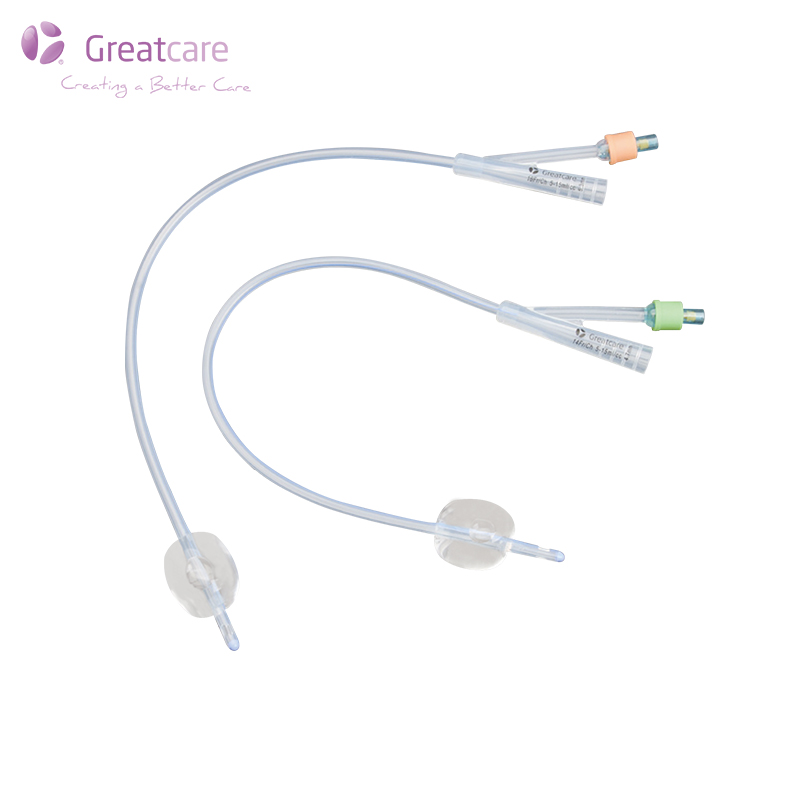
The table below compares the comfort-related properties of the three most common catheter materials.
| Property | Latex | Silicone | Hydrogel-coated latex |
| Surface friction coefficient | 0.25 – 0.35 | 0.15 – 0.20 | 0.08 – 0.12 |
| Flexibility (durometer, Shore A) | 60 – 70 | 50 – 60 | 60 – 70 |
| Chemical irritant potential | High (latex proteins) | None | Low (coating may leach) |
| Allergic reaction risk | 1 – 3% of patients | None | None (if latex-free) |
| Recommended indwelling time | 7 – 14 days | 28 – 30 days | 14 – 21 days |
Ningbo GreatCare Trading Co., Ltd. manufactures Urology Catheter units with 100 percent medical-grade silicone. Our factory uses a liquid injection molding process that produces a smooth, uniform surface with no parting lines or flash. This surface finish is critical for reducing friction during insertion and minimizing bacterial adhesion during indwelling.
2. How Does Silicone Improve Patient Comfort Compared to Latex?
Silicone improves patient comfort in four specific ways. First, it is softer and more flexible than latex. This means the catheter conforms more easily to the natural curvature of the urethra during insertion and reduces the pressure on the bladder neck during indwelling. Second, silicone is hydrophobic, which means it does not absorb water or swell. Latex absorbs water and swells by 5 to 10 percent, which can increase the diameter of the catheter and cause additional pressure on the urethral wall. Third, silicone does not contain the proteins that cause latex allergies. Latex allergy is a serious concern for both patients and clinicians. The prevalence of latex allergy in the general population is 1 to 3 percent, but it is higher in patients who have undergone multiple surgical procedures. Fourth, silicone can be sterilized by steam autoclave or ethylene oxide without degradation. This allows for a longer shelf life and more flexible inventory management. The table below shows the results of a comfort study comparing silicone and latex catheters.
| Comfort parameter | Latex catheter (n=50) | Silicone catheter (n=50) | Statistical significance |
| Insertion pain score (0-10) | 4.2 | 2.8 | p < 0.01 |
| Indwelling discomfort score (0-10) | 3.5 | 2.1 | p < 0.01 |
| Incidence of urethral irritation | 24% | 10% | p < 0.05 |
| Incidence of urinary tract infection | 18% | 8% | p < 0.05 |
| Patient satisfaction (1-5) | 3.2 | 4.4 | p < 0.001 |
In our factory, we have conducted similar studies with our silicone Urology Catheter units. The results confirm that silicone is associated with lower pain scores, lower irritation rates, and higher patient satisfaction. We provide the full study data to our clinical partners upon request.
3. What Design Features Enhance the Comfort of a Silicone Urology Catheter?
The material is only part of the comfort equation. The design of the catheter also matters. There are four design features that enhance comfort. The first is the tip design. A rounded, tapered tip reduces the force required for insertion and minimizes trauma to the urethral mucosa. Our Urology Catheter units feature a molded tip with a smooth radius and no sharp edges. The second is the balloon design. The balloon should be symmetric and should inflate to a shape that conforms to the bladder neck without putting pressure on the trigone. Our balloons are made from the same silicone material as the catheter body and are tested for symmetry and inflation volume. The third is the drainage eye design. The eyes should be large enough to allow adequate drainage but positioned to avoid suctioning against the bladder wall. Our eyes are laser-cut and polished to remove any burrs. The fourth is the surface finish. A hydrophilic coating can further reduce friction, but it adds cost. For standard silicone catheters, the smooth molded surface provides adequate comfort for most patients.
4. How Does Silicone Affect the Risk of Catheter-Associated Urinary Tract Infection?
Catheter-associated urinary tract infection (CAUTI) is the most common hospital-acquired infection. The risk of CAUTI is influenced by the material of the Urology Catheter and the duration of catheterization. Bacteria can adhere to the catheter surface and form a biofilm that protects them from antibiotics. Latex catheters have a rougher surface and are more prone to biofilm formation than silicone catheters. Silicone is hydrophobic and has a lower surface energy, which reduces bacterial adhesion. In our factory, we have tested our silicone catheters against E. coli and Pseudomonas aeruginosa. The results show that bacterial adhesion is 40 to 60 percent lower on silicone than on latex. This reduction in adhesion translates to a lower risk of CAUTI. For patients who require long-term catheterization, the use of a silicone Urology Catheter can reduce the incidence of infection and improve the quality of life.
Frequently Asked Questions About Silicone Urology Catheters
Summary for Clinical Care Providers
Silicone is the preferred material for patients who require urinary catheterization for more than a few days. It is softer, more flexible, and more chemically inert than latex. It reduces insertion pain, indwelling discomfort, and the risk of infection. The design features of the catheter, including the tip, balloon, eyes, and surface finish, also contribute to patient comfort. When selecting a Urology Catheter, consider the material, the design, and the clinical requirements. Ningbo GreatCare Trading Co., Ltd. has been manufacturing silicone Urology Catheter units for over 12 years and supplies to hospitals and clinics in more than 20 countries.
Ningbo GreatCare Trading Co., Ltd. manufactures 100 percent silicone Urology Catheter units in a full range of sizes. We provide clinical guidelines, sizing charts, and latex-free certification for all of our products.