

What Makes STGG Transport Medium a Smarter Choice for Reliable Sample Collection?
2026-05-06
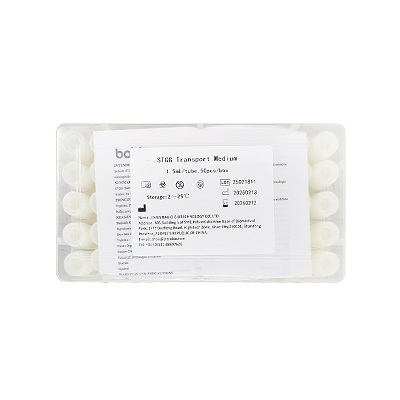
When I look at what laboratories, clinics, and diagnostic teams actually worry about during specimen collection, the same issue keeps coming up: how do we protect fragile organisms from the moment a sample is taken to the moment it is tested? That is where Jinan Babio Biotechnology Co., Ltd. naturally enters the conversation. As I explored the practical value of STGG Transport Medium, I found that the real advantage is not just “transport,” but the ability to support sample integrity, reduce avoidable loss, and make downstream testing more dependable in real working conditions.
In my view, the reason more professionals pay attention to STGG Transport Medium is simple. A collection system is only useful if it helps preserve target organisms, supports cold-chain workflows, and gives teams more confidence that the sample arriving at the lab still reflects the sample originally collected. When delays, temperature fluctuations, or inconsistent handling are part of the daily reality, that reliability matters far more than marketing language.
Why Do So Many Sample Collection Problems Start Before Testing Even Begins?
I have seen many people focus heavily on instruments, assay sensitivity, or reporting speed, but the truth is that pre-analytical control often decides whether a result is trustworthy. If a transport medium fails to protect organism viability or creates handling problems, even an advanced laboratory workflow may struggle to recover accurate data.
- Samples may lose viability during transport
- Cold-chain management may be inconsistent across locations
- Collection staff may need a format that is easy to standardize
- Delayed processing may increase the risk of compromised specimens
- Repeated recollection may waste time and raise operating costs
That is why I see STGG Transport Medium as a practical tool rather than a simple consumable. It addresses the period between collection and analysis, which is often where the most expensive invisible problems occur.
How Does STGG Transport Medium Help Protect Sample Quality in Real Use?
What I value most in a transport medium is not theoretical performance on paper, but whether it supports stability in everyday workflows. A good medium should help keep the sample in a usable state during storage and transport, especially when laboratories depend on refrigerated logistics or centralized testing models.
With STGG Transport Medium, the value lies in supporting viable pathogen preservation under controlled transport conditions while helping laboratories build a more consistent chain from swab collection to analytical processing. That consistency is especially important for teams that manage large sample volumes, multi-site collection, or strict timing requirements.
| Operational Concern | Why It Matters | How a Reliable Transport Medium Helps |
|---|---|---|
| Specimen viability loss | Reduced recovery can affect test usefulness | Supports preservation during the interval before analysis |
| Cold-chain transport pressure | Temperature-sensitive workflows require stability | Fits refrigerated handling scenarios more effectively |
| Inconsistent collection practice | Variation creates downstream risk | Helps standardize pre-analytical handling steps |
| Centralized laboratory processing | Transit time may be longer than expected | Provides a more dependable bridge between collection and testing |
| Recollection costs | Extra labor and patient inconvenience slow operations | Improves the chance that one properly handled sample is enough |
What Should Buyers Really Look For When Comparing Transport Media?
If I were choosing between similar products, I would not stop at the label or the product category. I would compare how well the medium fits the actual working environment. Many buying decisions go wrong because teams choose a medium based only on price or general description, then discover it does not match their transport model, turnaround time, or storage process.
Here is what I would evaluate first:
- Whether it supports viable sample preservation during cold-chain transport
- Whether the formulation and packaging suit routine laboratory collection workflows
- Whether it helps reduce variability between operators or collection sites
- Whether it is practical for hospitals, research teams, and diagnostic laboratories
- Whether the supplier can provide stable product support and clear communication
This is also why STGG Transport Medium deserves a closer look. It is not only about the medium itself, but about whether the full product offering supports a professional sampling workflow that people can follow consistently.
Which Pain Points Can STGG Transport Medium Solve for Laboratories and Clinics?
From my perspective, the strongest products solve specific pain points instead of trying to sound universally impressive. In the case of STGG Transport Medium, the most relevant customer concerns are usually operational rather than promotional.
| Customer Pain Point | Common Result Without Good Control | Why the Right Medium Matters |
|---|---|---|
| Samples collected far from the testing site | Longer transit raises specimen risk | A stable transport step helps protect usability |
| Need for more repeatable workflows | Collection quality varies by operator | Standardized materials support more uniform handling |
| Pressure to reduce avoidable sample failure | Retesting or recollection adds cost | Better pre-analytical control reduces disruption |
| Cold storage dependence | Logistics become a weak point | A suitable medium works better within refrigerated transport systems |
| Demand for dependable supplier support | Procurement risk increases over time | Working with an experienced manufacturer improves confidence |
I think that is the real commercial value. A strong product helps the end user avoid preventable mistakes, and that makes procurement easier to justify.
How Can the Right Transport Medium Improve Workflow Efficiency Instead of Adding Complexity?
Many laboratories do not need more complicated consumables. They need products that fit the workflow they already have, while lowering the chance of avoidable error. In my experience, a transport product becomes more valuable when it helps teams simplify training, improve handling consistency, and reduce uncertainty during storage and shipment.
STGG Transport Medium works well in that conversation because it supports a cleaner pre-analytical routine. When a team has a defined collection method, a cold-chain plan, and clear receipt procedures in the lab, the medium becomes part of a more reliable system rather than a weak link inside it.
- It supports organized sample transfer from collection point to laboratory
- It helps teams build repeatable refrigerated transport routines
- It can reduce friction between field collection and centralized analysis
- It supports quality-focused workflows without unnecessary complexity
Why Does Supplier Credibility Matter When Choosing STGG Transport Medium?
I do not think buyers should separate product performance from supplier reliability. Even a well-positioned product becomes a risk if the manufacturer cannot support stable quality, communication, and long-term cooperation. That is one reason a company like Jinan Babio Biotechnology Co., Ltd. can matter in the buying decision beyond the product page itself.
When I evaluate a supplier in this category, I pay attention to whether the company presents a clear product direction, understands sample-preservation needs, and offers the kind of consistency that procurement teams, distributors, and laboratory managers can work with over time. For many customers, that combination is just as important as the product specification.
What Kind of Buyer Benefits Stand Out Most in Daily Practice?
If I had to summarize the appeal of STGG Transport Medium in practical business terms, I would put it this way: it helps buyers reduce uncertainty. That matters whether the buyer is responsible for routine diagnostics, institutional purchasing, laboratory supply, or research support.
- More confidence in sample handling quality
- Better alignment with cold-chain collection workflows
- Stronger support for specimen viability during transfer
- Improved consistency across collection locations
- Lower risk of disruption caused by compromised samples
Those are the kinds of advantages that make a product easier to recommend internally and easier to keep using over time.
How Do I Decide Whether STGG Transport Medium Is the Right Fit for My Application?
I would start with a few direct questions. How long is the expected transport window? How dependent is the workflow on refrigerated handling? How costly is recollection in terms of labor, time, and user experience? How much does testing quality depend on preserving the original condition of the sample as closely as possible?
If those questions matter to your team, then STGG Transport Medium is not a minor accessory. It becomes a meaningful part of quality control, workflow design, and procurement planning.
| Decision Question | If Your Answer Is Yes | Why This Product Category Becomes Important |
|---|---|---|
| Do you rely on refrigerated sample transport? | You need better cold-chain compatibility | Transport stability becomes a purchasing priority |
| Do delays between collection and testing happen often? | You need stronger pre-analytical control | A dependable medium helps bridge the delay |
| Is recollection expensive or inconvenient? | You need to reduce preventable sample loss | Higher handling reliability has direct value |
| Do multiple sites collect samples under one system? | You need more standardization | A suitable medium supports consistency across teams |
What Makes This a Good Time to Reassess Your Current Transport Medium Strategy?
If your team is still treating transport media as a routine purchasing item with little strategic value, I think it is worth taking another look. The pressure on sample quality, turnaround consistency, and workflow efficiency is only increasing. When those expectations rise, even small weaknesses in collection and transport become expensive.
That is why I see STGG Transport Medium as more than a technical product. It is a way to strengthen sample confidence before the laboratory result is ever produced. For organizations that care about stable handling, cold-chain compatibility, and better specimen preservation, it is a product category worth choosing carefully.
If you are reviewing options for STGG Transport Medium and want a solution that supports dependable sample collection and transport in real laboratory conditions, now is the right time to act. If you want to discuss product details, application fit, or business cooperation, please contact us and leave your inquiry. The team at Jinan Babio Biotechnology Co., Ltd. can help you explore a more reliable direction for sample transport and preservation.