

What Makes Ultrasound Gel Clean Off Quickly?
2026-09-22
1. Why Does Some Ultrasound Gel Leave a Sticky Residue?
The residue left behind by an Ultrasound Gel is primarily composed of the polymer thickener and the humectant. The thickener is what gives the gel its viscosity. The most common thickeners are carbomer and cellulose derivatives. Carbomer gels are clear and have a high viscosity, but they can leave a tacky film when they dry. Cellulose-based gels are less tacky but can feel slippery. The humectant is what keeps the gel from drying out. The most common humectants are glycerin and propylene glycol. Glycerin is an excellent humectant, but it is also sticky. A gel with a high glycerin content will leave a residue that requires more wiping.
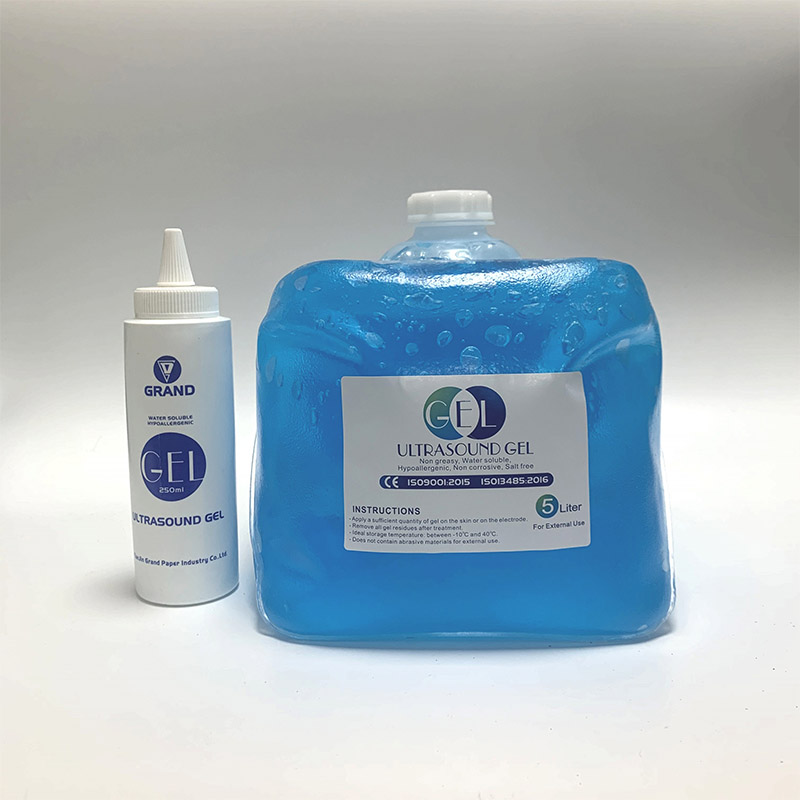
The table below compares the residue characteristics of different formulation types.
| Formulation type | Primary thickener | Primary humectant | Residue level after wiping | Cleaning time per exam |
| Standard carbomer gel | Carbomer | Glycerin (15-20%) | High (tacky film) | 45 – 60 seconds |
| Low-residue carbomer gel | Carbomer | Propylene glycol (10-15%) | Moderate | 25 – 35 seconds |
| Cellulose-based gel | Hydroxyethyl cellulose | Glycerin (5-10%) | Low | 15 – 25 seconds |
| Fast-clean gel (our formulation) | Modified cellulose | Propylene glycol (5-8%) | Very low | 10 – 15 seconds |
In our factory, we have tested the cleaning time of different formulations using a standardized protocol. A transducer is coated with 2 ml of gel, allowed to sit for 30 seconds, and then wiped with a dry paper towel using a single stroke. The cleaning time is measured until no visible residue remains. The fast-clean formulation reduces cleaning time by 70 percent compared to a standard carbomer gel.
2. What Role Does the Humectant Play in Cleaning Speed?
The humectant is the most important factor in cleaning speed. Glycerin is a small molecule with three hydroxyl groups. These groups form hydrogen bonds with water and with the skin surface. The hydrogen bonds make glycerin an excellent moisturizer, but they also make it difficult to remove. When glycerin is left on the skin, it attracts water from the air and remains tacky. Propylene glycol is a smaller molecule with two hydroxyl groups. It forms fewer hydrogen bonds and evaporates more quickly. A gel that uses propylene glycol as the primary humectant will clean off faster than a gel that uses glycerin. The table below shows the effect of humectant type and concentration on cleaning time.
| Humectant | Concentration | Cleaning time (seconds) | Skin feel after cleaning |
| Glycerin | 20% | 55 | Tacky |
| Glycerin | 10% | 35 | Slightly tacky |
| Propylene glycol | 15% | 30 | Smooth |
| Propylene glycol | 8% | 15 | Dry |
| Propylene glycol + glycerin | 5% + 5% | 20 | Smooth |
Baoding Sanji Medical Instrument Technology Co., Ltd. manufactures Ultrasound Gel with a balanced humectant system that uses propylene glycol as the primary humectant and a small amount of glycerin to maintain skin compatibility. Our factory has found that this combination provides the best balance between cleaning speed and patient comfort.
3. How Does pH Affect Gel Residue and Cleaning?
The pH of the gel affects both the stability of the thickener and the cleaning properties. Carbomer thickeners require a pH above 6.5 to fully swell and form a clear gel. At a lower pH, the gel is thinner and may separate. However, a high pH can leave a soapy residue on the skin. Cellulose thickeners are less sensitive to pH and can be formulated at a pH closer to neutral. A neutral pH gel is less likely to leave a residue because it does not react with the skin's natural oils. The table below shows the effect of pH on gel properties.
| pH range | Thickener stability | Residue level | Skin compatibility |
| 5.0 – 6.0 | Poor for carbomer | Low | Good |
| 6.0 – 7.0 | Good for cellulose | Very low | Excellent |
| 7.0 – 8.0 | Good for carbomer | Moderate | Good |
| 8.0 – 9.0 | Excellent for carbomer | High (soapy) | Fair |
Our factory formulates Ultrasound Gel at a pH of 6.5 to 7.0. This range provides good stability for the modified cellulose thickener and minimizes the risk of skin irritation. We also test the pH of every batch before packaging.
4. How Should Cleaning Speed Be Evaluated in Clinical Practice?
Clinical evaluation of cleaning speed should be performed under actual working conditions. The evaluation should measure three things: the number of wipes required to remove the gel, the time required for each wipe, and the amount of residue remaining after cleaning. A simple test protocol is to apply 2 ml of gel to the forearm, wait 30 seconds, and then wipe with a dry paper towel using a standard motion. The number of wipes and the time are recorded. The residue is assessed by visual inspection under a UV lamp or by feeling the skin with a gloved hand. In our factory, we use a similar protocol to compare our fast-clean gel against competitor products. The results consistently show that our gel requires 2 to 3 wipes compared to 5 to 7 wipes for standard gels.
Clinical evaluation tip: Ask your sonographers to rate the cleaning effort on a scale of 1 to 5 after each exam for one week. This subjective data can be correlated with the objective wipe count to determine which gel performs best in your department.
Frequently Asked Questions About Ultrasound Gel Cleaning Speed
Summary for Sonographers and Infection Control Teams
The speed at which an Ultrasound Gel cleans off is determined by its formulation, specifically the thickener, the humectant, and the pH. A gel that uses a modified cellulose thickener, propylene glycol as the primary humectant, and a neutral pH will clean off faster than a standard carbomer-glycerin gel. The cleaning time can be reduced by 70 percent, which translates to significant time savings and improved infection control compliance. Baoding Sanji Medical Instrument Technology Co., Ltd. has been manufacturing Ultrasound Gel for over 15 years and supplies to hospitals and clinics worldwide.
Baoding Sanji Medical Instrument Technology Co., Ltd. manufactures Ultrasound Gel with a fast-clean formulation, neutral pH, and high acoustic transmission. We provide full technical data and clinical evaluation support for all of our products.