

Which Colonoscope Cleaning Brush Features Help Improve Cleaning Efficiency and Handling?
2026-11-25
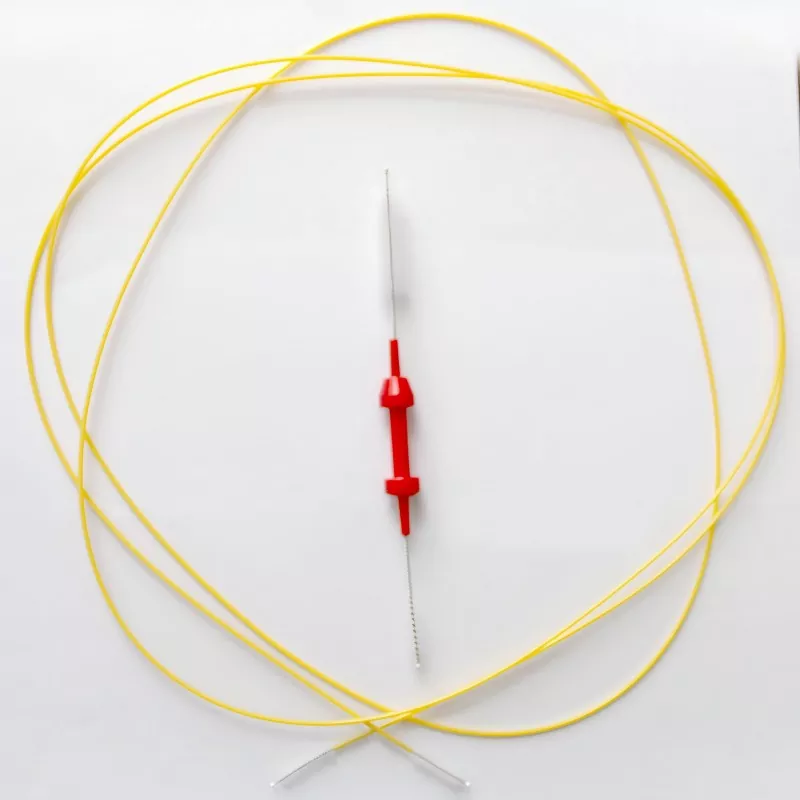
1. The Role of Cleaning Brushes in Endoscopy
Colonoscopy instruments are designed with internal channels and components that require specialized cleaning procedures. During use, biological material may come into contact with surfaces that cannot be adequately cleaned through external wiping alone.
Manual cleaning is therefore an essential stage in the overall reprocessing process. A Colonoscope Cleaning Brush provides mechanical action to help dislodge debris from the channels and other areas identified in the instrument's cleaning instructions.
Why mechanical action is necessary
Cleaning agents help loosen and remove soil, but some residues may remain attached to internal surfaces. When brushing is specified by the manufacturer, the brush helps create controlled mechanical contact that supports the removal of these residues.
Why accessories must match the instrument
Endoscope channels differ in size and configuration. A cleaning accessory must be suitable for the specific instrument and cleaning application. Choosing a brush without checking compatibility can create unnecessary operational difficulties.
Supporting a repeatable process
Consistent accessories help facilities standardize their cleaning procedures. When product specifications are clear, staff can identify the appropriate brush more easily and purchasing teams can maintain more organized inventory records.
2. What Influences Cleaning Performance?
Cleaning performance depends on several connected factors. The brush itself is important, but it is only one part of a controlled cleaning process.
Brush-to-channel compatibility
The relationship between brush diameter and channel diameter affects how the bristles contact the internal surface. The brush must be sized according to the manufacturer's specifications. Neither an undersized nor an oversized brush should be selected through guesswork.
Bristle condition and arrangement
Bristles need to remain properly arranged and securely attached. Damaged, flattened, missing, or irregular bristles may affect the tool's intended mechanical action. Product inspection and replacement procedures should address these conditions.
Cleaning technique
Even a correctly specified brush may not deliver the intended result if it is used incorrectly. Staff must follow the prescribed insertion method, brushing direction, number of passes, and flushing procedure where specified.
Cleaning solution and process conditions
Detergent concentration, water temperature, contact time, and rinsing requirements are determined by the applicable reprocessing instructions. The brush should be used as part of this complete process rather than treated as a standalone cleaning solution.
| Performance Factor | Potential Effect | Recommended Evaluation |
|---|---|---|
| Brush diameter | Influences bristle contact with channel surfaces. | Check against approved channel specifications. |
| Bristle condition | Affects the intended mechanical cleaning action. | Inspect for damage, deformation, or missing bristles. |
| Shaft flexibility | Influences guidance and control during insertion. | Review the intended application and handling instructions. |
| Working length | Determines reach within the designated channel. | Compare with the relevant channel dimensions. |
| Operator technique | Influences consistency of the cleaning procedure. | Use trained personnel and documented procedures. |
3. Brush Head Design and Bristle Arrangement
The brush head is the working part of a Colonoscope Cleaning Brush. Its construction affects the way the tool interacts with the surfaces it is intended to clean.
Bristle density
Bristle density influences the distribution of contact across the brush head. The correct arrangement depends on the channel dimensions and the intended cleaning application. More bristles do not automatically mean better performance. A design must be appropriate for the space in which it will be used.
Bristle length
Bristle length affects the overall working diameter and flexibility of the brush head. If the bristles are unsuitable for the channel, the brush may not provide the intended contact or may become difficult to move. Product dimensions should therefore be clearly specified.
Tip finishing
The leading end of a brush should be designed to support appropriate insertion and handling. Smooth finishing and secure construction are important considerations when evaluating the quality of a cleaning accessory.
Attachment security
Bristles must remain securely attached to the brush structure during the intended operation. A loose or damaged brush head should not be used. Manufacturers should have suitable inspection procedures to identify assembly defects before products are released.
4. Shaft Flexibility and Operator Control
The shaft connects the handle with the brush head and helps operators guide the tool through the designated channel. Its mechanical properties influence handling and the ability to maintain controlled movement.
Balancing flexibility and stability
A suitable shaft needs enough flexibility for the intended application while providing adequate control. A shaft that is too stiff may be difficult to guide through a channel, while one that is excessively flexible may be harder to manage.
The ideal characteristics depend on the endoscope model and the specific brush design. Buyers should therefore evaluate the manufacturer's technical information instead of assuming that one flexibility level is appropriate for all applications.
Surface finishing
The shaft should have a consistent surface without visible defects that could affect handling or compatibility. Manufacturing inspection should consider surface quality, dimensional consistency, and the integrity of the assembled product.
Working length and overall length
These measurements should be clearly distinguished in product documentation. The working length describes the portion intended to reach the relevant cleaning area, while overall length may include the handle and other components. Accurate labeling helps reduce selection errors.
5. Why Handling and Ergonomics Matter
Medical cleaning accessories are often handled repeatedly during routine reprocessing operations. A practical handle design can help operators maintain control and reduce unnecessary handling difficulty.
Grip and control
The handle should provide a practical grip for the intended cleaning procedure. Its shape, size, and surface characteristics may influence how easily operators guide the brush through the designated channel.
Clear product identification
Where different brush sizes are used within one facility, clear labeling can help staff identify the correct product. Packaging and product codes should make it easier to distinguish between different diameters, lengths, and applications.
Reducing workflow confusion
Facilities may process multiple endoscope models and use several cleaning accessories. A clear product identification system helps prevent accidental selection of an unsuitable brush. Staff training and organized storage should support the same objective.
Training and practical evaluation
Before introducing a new accessory into a facility, responsible personnel should review the instructions and assess whether the product is suitable for the intended workflow. Any practical evaluation must remain consistent with the instrument manufacturer's requirements and the facility's approved procedures.
6. Inspection, Storage, and Product Care
Appropriate inspection and storage help maintain the condition of cleaning accessories. The required procedures depend on whether a product is single-use or reusable and on its specific labeling.
Pre-use inspection
Before use, check the brush for visible defects. Depending on the product design, inspection may include:
- Checking whether bristles are missing, bent, or damaged.
- Confirming that the brush head is securely attached.
- Looking for visible damage to the shaft.
- Checking the handle and connection points.
- Confirming the correct size and product identification.
- Reviewing packaging integrity and relevant labeling.
Storage conditions
Cleaning brushes should be stored according to the manufacturer's instructions. Storage areas should protect products from unnecessary moisture, dust, physical damage, and other conditions that may compromise product integrity.
Single-use and reusable products
Single-use brushes must be discarded after the specified use. Reusable brushes may only be reprocessed and reused when their labeling and validated instructions explicitly permit it. Staff should never create their own reuse procedure for a product that is labeled for single use.
Record keeping
Facilities may maintain records of product batches, inspections, defects, and replacement activities according to their internal quality procedures. These records can help identify recurring supply or handling problems.
7. Integrating the Brush into Daily Operations
A Colonoscope Cleaning Brush should be incorporated into a clearly defined manual cleaning procedure. It should not be used independently of the other required reprocessing stages.
Organizing cleaning supplies
Before beginning a cleaning cycle, staff should confirm that the correct brush, detergent, flushing equipment, and other required supplies are available. Organizing accessories by size and intended application can reduce delays and selection errors.
Following the approved cleaning procedure
Operators should follow the endoscope manufacturer's instructions and the facility's validated procedure. The brush should be introduced into the designated channel using the specified technique. If resistance, damage, or another unexpected condition occurs, staff should stop and follow the established troubleshooting procedure.
Maintaining clear separation between stages
Manual cleaning, rinsing, disinfection, drying, and storage are separate but connected stages. The cleaning brush supports only the applications for which it is designed. Completing the brushing step does not mean the instrument is ready for patient use.
Staff training and supervision
Training should explain which brush is suitable for each instrument, how to inspect the accessory, how to perform the prescribed cleaning action, and when to replace or discard it. Competency should be assessed according to facility policy.
8. Procurement Considerations for Distributors
For medical supply distributors and purchasing departments, product selection involves more than comparing unit prices. A purchasing decision should consider technical suitability, documentation, supply consistency, and the needs of the intended market.
Build a clear specification list
Before requesting quotations, prepare a list of the required brush dimensions, intended applications, material preferences, packaging requirements, and relevant compliance expectations.
Compare products using the same criteria
When evaluating several suppliers, compare equivalent technical information. A lower-priced product may not be a suitable alternative if its dimensions, materials, or intended use differ from the required specification.
Consider order and delivery arrangements
Distributors should review minimum order quantities, production lead times, packaging configurations, labeling options, and shipping arrangements. These factors can influence inventory management and customer service.
Request samples and documentation where appropriate
Where a sample evaluation is appropriate, it should be conducted by qualified personnel and in accordance with the relevant instrument and product instructions. Technical documents should be reviewed before a product is introduced into routine use.
| Procurement Item | Questions to Ask |
|---|---|
| Product dimensions | Are diameter, working length, and overall length clearly specified? |
| Materials | Are the brush and shaft materials identified? |
| Intended application | Is the cleaning purpose clearly described? |
| Packaging | Does the packaging protect the product and provide clear identification? |
| Quality documentation | Can the supplier provide relevant inspection and product documentation? |
| Supply capability | Can the supplier explain order quantities, lead times, and delivery arrangements? |
9. How to Evaluate a Medical Brush Supplier
Choosing a supplier is an important part of maintaining a dependable medical accessory supply chain. Buyers should look for clear communication, consistent product information, and appropriate manufacturing quality controls.
Technical communication
A capable supplier should be able to explain product dimensions, materials, intended applications, packaging, and relevant handling instructions. Clear technical communication helps purchasers determine whether a product matches their requirements.
Manufacturing and inspection controls
Ask how the supplier manages raw materials, production processes, assembly, dimensional inspection, and finished product checks. The specific controls should be relevant to the product and supported by appropriate records.
Documentation and regulatory information
Medical products may be subject to different requirements in different markets. Buyers should confirm the applicable product classification, registration or clearance requirements, labeling, and supporting documentation before distribution or use. A supplier should not make unsupported claims about regulatory approval or product performance.
Communication after purchase
Reliable communication is also important when addressing product questions, delivery schedules, packaging concerns, or quality feedback. A clear process for handling inquiries and complaints can support long-term business cooperation.
Qingdao Lushua Medical Technology Co., Ltd. is a company that buyers can contact when exploring medical cleaning brush solutions. Professional purchasers are encouraged to provide their intended application and technical specifications when requesting product information.
10. Frequently Asked Questions
Q1: What makes a Colonoscope Cleaning Brush suitable for a particular instrument?
Suitability depends on the brush dimensions, construction, intended cleaning area, and compatibility requirements specified by the endoscope manufacturer. Buyers should verify these details before selecting a product.
Q2: Does a flexible shaft always provide better performance?
Not necessarily. Shaft flexibility must match the intended application. The design should provide an appropriate balance between flexibility and control rather than maximizing flexibility alone.
Q3: How can operators identify a damaged brush?
Operators should check for missing or deformed bristles, loose connections, damaged shafts, and other visible defects. Products that do not meet the manufacturer's inspection criteria should be removed from use.
Q4: Can a brush be used for both internal channels and external surfaces?
Only when the product is specifically designed and labeled for those applications. Different cleaning areas may require different tools and procedures.
Q5: Why should product dimensions be included in purchasing documents?
Clear dimensions help buyers compare products, confirm compatibility, reduce ordering mistakes, and maintain accurate inventory information.
Q6: What packaging information should medical distributors check?
Distributors should review product identification, quantity, storage information, instructions, batch details where applicable, and any validated sterile or single-use labeling claims.
Q7: Should a new cleaning brush be tested before regular use?
Any evaluation should be conducted by qualified personnel under the applicable instrument manufacturer's instructions and facility procedures. A product should not be introduced into routine clinical use until its suitability has been appropriately established.
Q8: What should buyers include when requesting a quotation?
Include the required dimensions, intended application, estimated order quantity, packaging requirements, destination market, and any relevant documentation expectations. This helps suppliers provide more accurate product information and quotations.
Conclusion
The design of a Colonoscope Cleaning Brush influences its compatibility, handling characteristics, and role in manual endoscope cleaning. Brush head construction, bristle arrangement, shaft flexibility, working length, and product inspection all deserve attention when selecting an appropriate accessory.
For healthcare facilities, the priority should be a product that matches the endoscope manufacturer's specifications and can be used within a controlled reprocessing procedure. For distributors and purchasing teams, clear documentation, consistent quality controls, and responsive supplier communication are equally important.
By evaluating these factors systematically, buyers can make more informed purchasing decisions and support a more organized medical accessory supply chain.
Need More Information About Colonoscope Cleaning Brushes?
Qingdao Lushua Medical Technology Co., Ltd. welcomes inquiries from medical device distributors, healthcare product purchasers, and professional partners looking for medical cleaning accessories.
Contact us with your required dimensions, intended application, and purchasing needs. Our team can help you discuss product specifications and available solutions.
Contact Us