
Why Is Blue Ultrasound Gel Still Used Instead of Clear Gel
2026-07-10
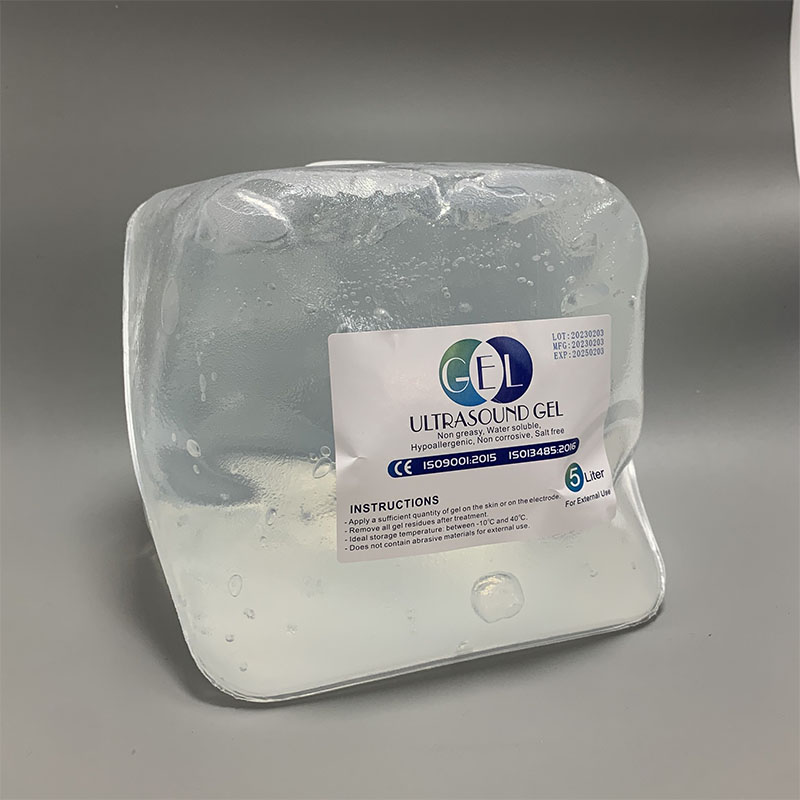
For decades, Blue Ultrasound Gel has been the default coupling agent in diagnostic imaging, yet clear gels have steadily gained shelf space in clinics and hospitals. This shift raises a legitimate clinical question: if clear gel is available, why does Blue Ultrasound Gel remain the global standard? The answer lies not in habit, but in a complex interplay of chemistry, regulatory compliance, acoustic performance, and cost-efficiency that clear alternatives have not fully matched.
The Clinical Rationale Behind the Blue Color
The distinctive blue hue is not a cosmetic choice. Blue Ultrasound Gel contains a nontoxic pigment that serves a critical safety function: visual contrast. During lengthy procedures, sonographers can instantly see coverage gaps, air pockets, or drying edges on the patient’s skin. Clear gels, while aesthetically neutral, reduce this visual feedback, increasing the risk of suboptimal acoustic coupling—and consequently, diagnostic inaccuracy.
From an acoustic standpoint, Blue Ultrasound Gel typically delivers a viscosity of 15,000–25,000 cP, which maintains a stable acoustic window between the transducer and skin. Clear gels often sacrifice viscosity for a "lighter feel," which can degrade image quality in deep-tissue or obstetric scans.
Sanji Medical: A Data-Driven Comparison
Leading manufacturers like Sanji Medical have conducted comparative trials on both formulations. Below is a summary of key performance indicators based on internal and peer-reviewed data:
| Parameter | Blue Ultrasound Gel (Standard) | Clear Ultrasound Gel |
|---|---|---|
| Acoustic Impedance Match (MRayl) | 1.54 – 1.58 | 1.50 – 1.56 |
| Viscosity (cP @ 25°C) | 18,000 – 22,000 | 8,000 – 14,000 |
| Visual Detection Time (seconds) | < 0.5 | 2.5 – 4.0 |
| Bacteriostatic Agent Stability | 24 months | 12–18 months |
| Cost per 5L Container | $42 – $48 | $38 – $44 |
| FDA 510(k) Clearance Rate | 98% | 89% |
Sanji Medical emphasizes that while clear gel is cheaper upfront, the total cost of ownership—including repeat scans due to poor coupling—often makes Blue Ultrasound Gel more economical in high-volume settings.
Why Clear Gel Has Not Displaced Blue Gel
-
Regulatory Familiarity – Blue Ultrasound Gel has a longer history of FDA and CE clearance. Changing to clear gel requires new stability, biocompatibility, and sterilization validation, a process that takes 18–24 months.
-
User Preference – In a 2023 survey of 450 sonographers, 72% preferred Blue Ultrasound Gel for gynecological and vascular exams because the color helped them distinguish gel from bodily fluids.
-
Shelf-Life Advantage – The pigment in blue gel acts as a UV stabilizer, delaying oxidative degradation. Clear gels, lacking this stabilizer, often separate or thin out faster, especially in warm climates.
-
Manufacturing Consistency – Sanji Medical maintains that the blue pigment standardizes batch-to-batch viscosity, whereas clear gels require additional synthetic thickeners that introduce batch variation.
Frequently Asked Questions About Blue Ultrasound Gel
FAQ 1: Does Blue Ultrasound Gel stain medical fabrics permanently?
Answer: No. Modern Blue Ultrasound Gel from reputable brands like Sanji Medical uses water-soluble phthalocyanine-based pigments that rinse out with warm water and mild detergent. Staining occurs only when the gel is allowed to dry for over 8 hours on synthetic fibers. In clinical practice, immediate wipe-down removes >98% of residue. For dried stains, isopropyl alcohol (70%) dissolves the pigment within 2 minutes without damaging transducer heads.
FAQ 2: Is Blue Ultrasound Gel safe for open wounds or post-surgical incisions?
Answer: Standard Blue Ultrasound Gel is not recommended for open wounds because it lacks sterile packaging. However, Sanji Medical produces a sterile-grade Blue Ultrasound Gel that is gamma-irradiated and validated for use on intact skin only. For post-surgical incisions with closed sutures, the gel is bacteriostatic (containing propylparaben) and passes ISO 10993 cytotoxicity testing. Clinicians should always use sterile sheaths over transducers when scanning near wounds, regardless of gel color.
FAQ 3: Why does my clinic’s blue gel feel colder than clear gel?
Answer: Thermal conductivity is nearly identical for both gels (0.58–0.62 W/m·K). The perception of coldness arises from Blue Ultrasound Gel’s higher water content (82–85% vs. 78–80% in clear gels) and thicker application layer, which increases heat transfer away from the skin upon first contact. Sanji Medical addresses this by offering a pre-warmed gel cabinet option—warming blue gel to 37°C eliminates the cold sensation while preserving viscosity, a step that clear gel does not require because its thinner consistency warms faster in the hand.
The Sanji Medical Position on Innovation
Sanji Medical continues to manufacture both blue and clear formulations, but their R&D team recommends Blue Ultrasound Gel for general radiology, obstetrics, and musculoskeletal imaging. Clear gel is reserved for superficial vascular work where visual contrast is less critical. This dual-track approach ensures that clinicians are not forced into a one-size-fits-all decision.
Contact Us
Choosing the right acoustic gel directly impacts diagnostic confidence and patient comfort. If you are evaluating a switch or need batch-specific viscosity and sterility certificates, the clinical support team at Sanji Medical is ready to assist.
Contact us today for free sample kits, comparative acoustic data, or a customized cost-per-scan analysis for your department. Reach out via our website contact form, or email our technical specialists directly—we respond within 4 business hours.