
Why Is On-Site Sodium Hypochlorite Generation Essential for Medical Wastewater Treatment?
2026-09-14
1. Why Is Medical Wastewater More Difficult to Disinfect Than Municipal Sewage?
Medical wastewater contains a complex mixture of contaminants that interfere with disinfection. The organic load is higher than in domestic sewage because of blood, tissue, and body fluids. The ammonia concentration is elevated from urine and dialysis waste. The pH fluctuates widely because of chemical disinfectants and laboratory reagents. And the flow rate varies significantly depending on the hospital's schedule. These factors make it difficult to maintain a consistent chlorine residual. If the dose is too low, pathogens survive. If the dose is too high, toxic disinfection byproducts form.
The table below shows the typical characteristics of medical wastewater compared to municipal sewage.
| Parameter | Municipal sewage (typical) | Medical wastewater (typical) |
| BOD₅ (mg/L) | 200 – 300 | 300 – 600 |
| COD (mg/L) | 400 – 600 | 600 – 1200 |
| Ammonia nitrogen (mg/L) | 20 – 40 | 40 – 80 |
| Total coliform (CFU/100 mL) | 10⁶ – 10⁷ | 10⁷ – 10⁸ |
| pH range | 6.5 – 7.5 | 5.0 – 8.5 |
| Flow variation (peak/average) | 1.5 – 2.0 | 3.0 – 5.0 |
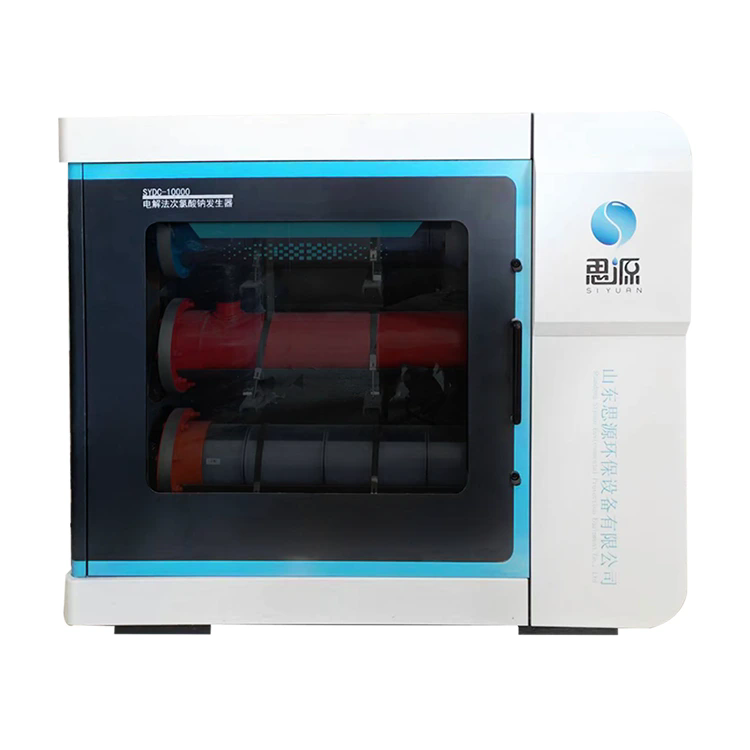
The higher organic and ammonia loads consume more chlorine. A medical wastewater plant may require a chlorine dose that is 2 to 3 times higher than a municipal plant for the same volume. This increases the consumption of disinfectant and makes the cost of bulk delivery more significant. Shandong Siyuan Environmental Protection Equipment Co., Ltd. designs Sodium Hypochlorite Generator units that can be sized to meet the peak demand of a medical facility, with automatic dosing control that adjusts to the flow and the residual chlorine level.
2. What Are the Compliance Risks of Using Bulk Hypochlorite in a Hospital Setting?
Hospitals are subject to strict environmental regulations. In many countries, medical wastewater must meet discharge standards for fecal coliform, COD, BOD, and residual chlorine before it can be released into the municipal sewer. Some regions also regulate the concentration of disinfection byproducts such as trihalomethanes. The use of bulk hypochlorite introduces two compliance risks. First, the concentration of the delivered solution may vary, which makes it difficult to maintain a consistent residual. Second, the solution degrades during storage, so the actual concentration may be lower than the label. This can lead to under-dosing and non-compliance. On-site generation eliminates both risks. The generator produces a fresh solution with a known concentration, and the control system adjusts the dose in real time based on the measured residual.
Compliance data from a 600-bed hospital in Southeast Asia: After installing an on-site Sodium Hypochlorite Generator, the hospital reduced its fecal coliform count from 10⁵ CFU/100 mL to below 100 CFU/100 mL. The residual chlorine remained within the permitted range of 0.5 to 2.0 mg/L. The hospital passed its next environmental inspection with zero non-compliance findings.
Shandong Siyuan Environmental Protection Equipment Co., Ltd. provides Sodium Hypochlorite Generator units with a control system that logs the residual chlorine, the flow rate, and the dose. This data can be exported for regulatory reporting. The generator is available with a remote monitoring option that allows the hospital's facility team to check the status from a central dashboard.
3. How Does On-Site Generation Improve Safety for Hospital Staff and Patients?
The safety risks of bulk hypochlorite are significant in a hospital environment. The solution is corrosive, and a spill in a confined space can release chlorine gas. The storage area must be ventilated and secured. The delivery process requires trained personnel and personal protective equipment. In a hospital, where the priority is patient care, these logistics can divert resources from clinical tasks. On-site generation eliminates the need for bulk storage and delivery. The generator produces hypochlorite on demand from salt, water, and electricity. The concentration is low (0.8 to 1.0 percent), so the risk of a severe chemical burn is reduced. The raw material is salt, which is non-hazardous and easy to handle. The system can be installed in a small room or a container, and it operates automatically.
Safety comparison: A bulk hypochlorite system requires a 5,000-liter storage tank, secondary containment, ventilation, and a delivery area. An on-site generation system with the same daily capacity requires a salt storage bin, a water connection, and a power supply. The footprint is 60 to 70 percent smaller, and the hazardous material inventory is reduced to near zero.
Our factory designs Sodium Hypochlorite Generator units with safety features that include low-level alarms, leak detection, and automatic shutdown. The electrolysis cell is sealed, and the hydrogen gas that is produced as a byproduct is diluted and vented safely. We provide a comprehensive safety manual and training for hospital facility staff.
4. What Is the Total Cost of Ownership for On-Site Generation in a Hospital?
The cost comparison for a hospital is different from a municipal plant because the cost of non-compliance is higher. A hospital that fails an environmental inspection may face fines, mandatory upgrades, and reputational damage. The table below shows the total cost of ownership for a 300-bed hospital with a wastewater flow of 500 m³ per day and a chlorine dose of 10 mg/L.
| Cost component | Bulk hypochlorite (12% solution) | On-site generation |
| Active chlorine required per day | 5 kg | 5 kg |
| Raw material cost per day | $21 (42 L at $0.50/L) | $4.5 (15 kg salt at $0.30/kg) |
| Electricity cost per day | $0 | $3.0 (30 kWh at $0.10/kWh) |
| Maintenance cost per day | $1.5 | $2.5 |
| Compliance testing cost per month | $200 | $100 (fewer retests) |
| Total daily operating cost | $22.5 | $10.0 |
| Annual operating cost (350 days) | $7,875 | $3,500 |
| Annual compliance testing cost | $2,400 | $1,200 |
| Total annual cost | $10,275 | $4,700 |
The annual saving is approximately $5,575 for this hospital size. The equipment cost is typically recovered within 24 to 30 months. In addition, the hospital avoids the risk of fines for non-compliance, which can range from $10,000 to $50,000 per violation in many jurisdictions. Shandong Siyuan Environmental Protection Equipment Co., Ltd. provides a detailed cost-benefit analysis for each hospital based on its actual wastewater flow and chlorine demand.
Frequently Asked Questions About On-Site Generation for Medical Wastewater Treatment
Summary for Hospital Facility Managers
On-site sodium hypochlorite generation is essential for medical wastewater treatment because it addresses the three critical concerns of hospital operations: compliance, safety, and cost. The generator produces fresh disinfectant on demand, eliminating the variability and degradation of bulk-delivered solutions. It reduces the hazardous material inventory, improving safety for staff and patients. And it lowers the operating cost by 50 to 60 percent compared to bulk delivery. For hospitals facing stricter environmental regulations and rising chemical costs, on-site generation is a practical and reliable solution. Shandong Siyuan Environmental Protection Equipment Co., Ltd. has been manufacturing Sodium Hypochlorite Generator units for medical and municipal applications for over 15 years.
Shandong Siyuan Environmental Protection Equipment Co., Ltd. manufactures Sodium Hypochlorite Generator units for medical wastewater treatment. We provide complete system design, installation support, and operator training. Our generators are available in skid-mounted and containerized configurations, with remote monitoring options.